









South India Temple Tour for Overseas Indians
South India Temple Tour for Overseas Indians By Vishnu Balaji Travels A South India Temple Tour for Overseas Indians is…





A long South India pilgrimage becomes easier when every destination leads naturally to the next instead of requiring repeated travel in opposite directions. The Best Route to Cover Major Temples in South India can begin around Tirupati and Chennai, move through the historic temple cities of northern and central Tamil Nadu, continue into the Cauvery delta, and finally reach Madurai, Rameswaram and Kanyakumari. This north-to-south approach creates a practical flow for travellers who want to connect several important pilgrimage centres in one journey.
Vishnu Balaji Travels plans South India temple journeys by considering temple locations, road connections, darshan schedules and suitable night halts. Rather than simply adding more temples, the aim is to create a South India temple tour best route where the travel direction remains clear and each region connects conveniently with the next.
For a comprehensive temple journey, the route can be arranged as:
Tirupati → Tiruttani → Kanchipuram → Tiruvannamalai → Chidambaram → Kumbakonam → Thanjavur → Trichy → Palani → Madurai → Rameswaram → Tiruchendur → Kanyakumari
This route connects several major pilgrimage regions while gradually travelling from northern South India towards the southern end of Tamil Nadu.
Tirupati is a practical northern starting point for a longer South India pilgrimage.
Major temple covered:
After Tirupati darshan, the route can continue towards Tiruttani instead of returning unnecessarily to the starting point.
Next Route: Tirupati → Tiruttani
Tiruttani introduces one of the six sacred Arupadai Veedu Murugan temples into the main route.
Major temple covered:
Continue towards Kanchipuram after darshan.
Kanchipuram is one of the most important temple cities on this route and allows travellers to cover major Shiva, Shakti and Vishnu temples within the same destination.
Major temples covered:
Route Flow: Tiruttani → Kanchipuram → Tiruvannamalai
Tiruvannamalai forms an important connection between the Kanchipuram region and the temple destinations further south.
Major temple covered:
Travellers may also plan Girivalam when it is part of their pilgrimage.
From Tiruvannamalai, continue towards Chidambaram rather than travelling back towards Chennai.
Next Route: Tiruvannamalai → Chidambaram
The next major stop is Chidambaram.
Major temple covered:
After Chidambaram, the route naturally enters the Kumbakonam temple region.
Kumbakonam can serve as an important temple-tour base because numerous temples are located in and around the town.
Major temples that can be included:
Travellers interested in the Navagraha circuit can allocate an additional day rather than trying to include all nine temples within the main transfer day.
The next section of the South India temple tour best route covers destinations that are relatively well connected.
Route: Kumbakonam → Thanjavur → Trichy
Major temple covered:
After Thanjavur, continue towards Trichy.
Trichy provides access to several important temples in and around the city.
Major temples covered:
This section is particularly useful for travellers combining major Shiva and Vishnu pilgrimage sites.
Instead of heading directly to Madurai, travellers interested in Murugan temples can include Palani.
Route: Trichy → Palani → Madurai
Major temple covered:
After Palani darshan, continue south towards Madurai.
Madurai becomes a major hub for the southern section of the journey.
Major temples covered:
This section also adds two more Arupadai Veedu temples to the overall route.
Next Route: Madurai → Rameswaram
Rameswaram is one of the major pilgrimage destinations in southern India.
Major temple covered:
Allow adequate time for the temple visit rather than treating Rameswaram only as a short road stop.
After completing Rameswaram, the route can proceed towards Tiruchendur.
Tiruchendur adds another important Murugan pilgrimage destination to the journey.
Major temple covered:
The coastal location also makes Tiruchendur a convenient connecting point before travelling further south.
Next Route: Tiruchendur → Kanyakumari
Kanyakumari forms a natural southern finishing point for this temple circuit.
Major temples covered:
The pilgrimage can conclude at Kanyakumari or travellers can arrange their return journey through Nagercoil, Madurai or another convenient departure city.
The major temple covered South India route can include:
| Travel Section | Main Temple Destination |
|---|---|
| Tirupati → Tiruttani | Tirupati & Tiruttani |
| Tiruttani → Kanchipuram | Kanchipuram temples |
| Kanchipuram → Tiruvannamalai | Arunachaleswarar Temple |
| Tiruvannamalai → Chidambaram | Nataraja Temple |
| Chidambaram → Kumbakonam | Kumbakonam temple region |
| Kumbakonam → Thanjavur | Brihadeeswarar Temple |
| Thanjavur → Trichy | Srirangam & Thiruvanaikaval |
| Trichy → Palani | Palani Murugan Temple |
| Palani → Madurai | Madurai temples |
| Madurai → Rameswaram | Ramanathaswamy Temple |
| Rameswaram → Tiruchendur | Tiruchendur Murugan Temple |
| Tiruchendur → Kanyakumari | Kanyakumari & Suchindram |
The purpose of choosing the Best Route to Cover Major Temples in South India is not simply to visit more temples. The route should reduce unnecessary backtracking while keeping temple visits and road travel manageable.
This route:
Yes. Travellers do not need to cover the entire circuit in a single journey.
For a shorter tour, the main route can be divided into:
This makes it easier to choose a route according to the number of available days.
The Best Route to Cover Major Temples in South India should follow geography rather than simply the popularity of individual temples. Starting in the north and progressing through Kanchipuram, Tiruvannamalai, the Cauvery temple region, Madurai and the southern pilgrimage centres creates a more organised journey.
Vishnu Balaji Travels can arrange the route according to the traveller’s starting city, available days and preferred temples. A well-planned South India temple tour best route helps reduce repeated road travel while providing sufficient time for darshan at the major temples included in the journey.
Explore Popular Blog Posts Across Categories

South India Temple Tour for Overseas Indians By Vishnu Balaji Travels A South India Temple Tour for Overseas Indians is…
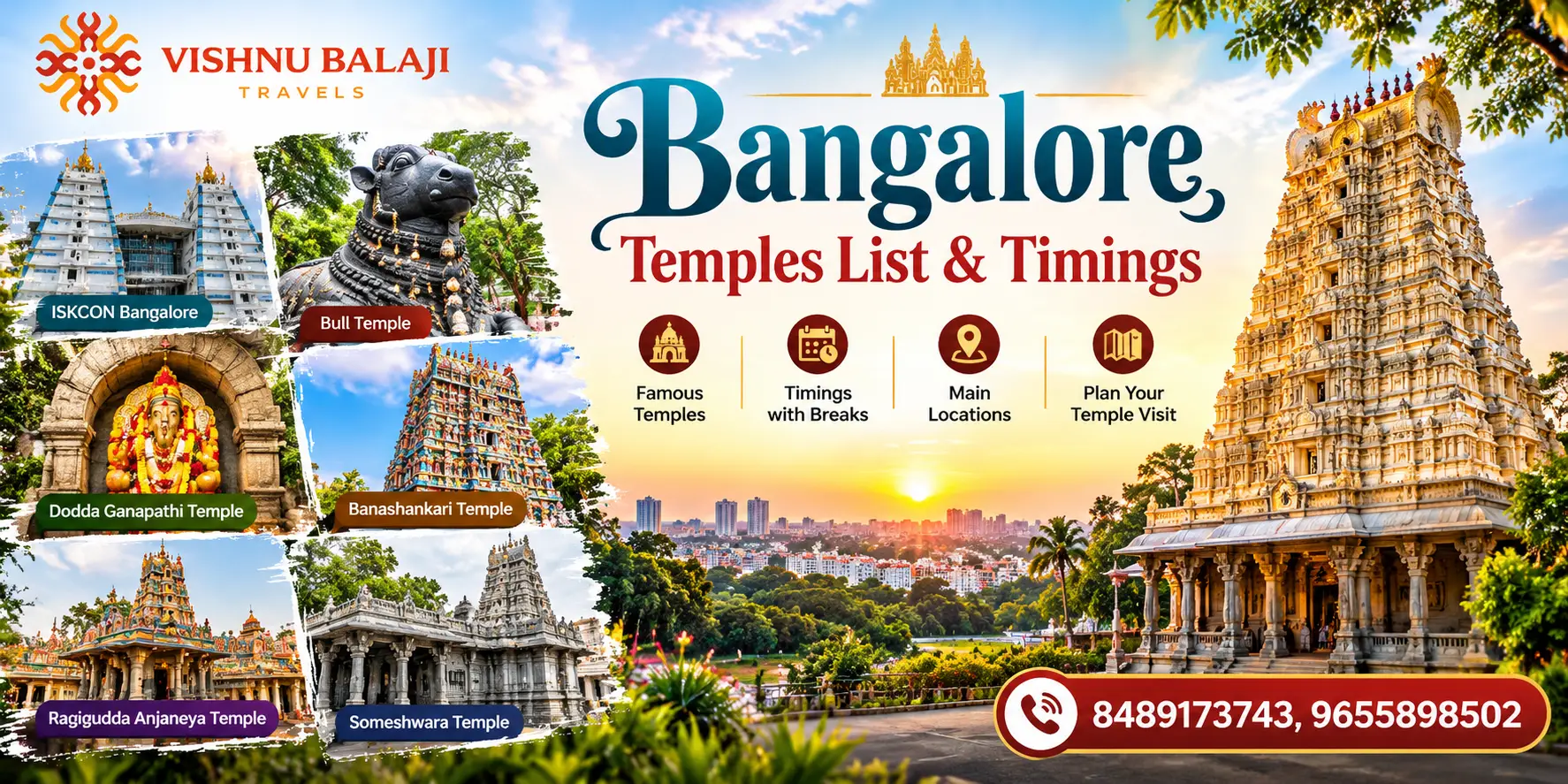
Bangalore Temples List & Timings – Famous Temples & Sacred Shrines Bangalore is home to a diverse collection of historic…

South India is one of the most spiritual regions in India, famous for its ancient temples, peaceful atmosphere, traditional culture,…

Chennai to South India Famous Temples Route Map by Vishnu Balaji Travels Chennai is a practical gateway for connecting some…

Planning a spiritual and scenic journey across South Tamil Nadu is one of the most memorable travel experiences for families,…

A temple visit in Kerala can feel quite different from visiting a regular sightseeing attraction. Traditional clothing is expected at…

South India Temple Tour Route Map A South India temple journey becomes much easier to understand when the destinations are…

Hyderabad Temples List & Timings – Sacred Temples Across the City Hyderabad is known not only for its historic landmarks…