









How to Book Tiruvannamalai Temple Darshan Tickets
How to Book Tiruvannamalai Temple Darshan Tickets Visiting Tiruvannamalai is often planned around three important experiences—Annamalaiyar Temple darshan, worship at…





The Tiruvannamalai Temple Entry Gates and Visitor Guide helps first-time devotees understand the massive Arunachaleswarar Temple complex before arriving for darshan. With towering gopurams, multiple entrances, inner prakarams and several shrines, knowing the basic temple layout can make your visit easier.
This guide by Vishnu Balaji Travels explains the important Tiruvannamalai Temple Entry Gates, visitor flow and useful tips for families, senior citizens and pilgrims.
Arunachaleswarar Temple has four prominent gateway towers positioned around the temple complex. The most famous is the Rajagopuram on the eastern side, which serves as the temple’s principal monumental gateway.
| Direction | Important Gateway | Visitor Note |
|---|---|---|
| East | Rajagopuram | Main and most prominent entrance |
| South | Thirumanjana Gopuram | Southern gateway |
| West | Pei Gopuram | Western gateway |
| North | Ammani Amman Gopuram | Northern gateway |
The exact gates used for public entry and exit can be regulated by the temple administration, particularly when large crowds are expected.
The magnificent Rajagopuram is the best-known entrance to Arunachaleswarar Temple and one of Tiruvannamalai’s major landmarks.
Many first-time visitors naturally identify the temple through this eastern gateway. After entering the temple complex, devotees proceed through the designated barricades and prakarams towards the main darshan areas.
Best for: First-time visitors and regular temple entry
Location: Eastern side of the temple complex
Thirumanjana Gopuram is situated on the southern side of the temple complex. It is one of the four major directional gopurams surrounding Arunachaleswarar Temple.
Visitors should not assume that every major gateway will always operate as a general public entrance. Access arrangements can be changed according to crowd-management requirements.
The Pei Gopuram marks the western side of the temple complex. It is another important part of the temple’s historic architectural layout.
Its role in visitor entry or exit may depend on the arrangements in effect on the day of your visit.
The Ammani Amman Gopuram stands on the northern side of Arunachaleswarar Temple. Together with the other directional towers, it forms part of the impressive gateway system surrounding the temple.
Public movement through this side can also be controlled during busy periods.
For a regular visit, follow the entrance boards, barricades and instructions displayed by the temple authorities when you arrive. The Rajagopuram is the principal eastern gateway, but operational entry and exit arrangements should not be assumed solely from the architectural gate names.
This becomes particularly important during:
Temporary barricades, separate queues, traffic restrictions and designated entry or exit points may be introduced on high-crowd days.
Early morning is generally convenient for devotees who want to avoid the heavier crowds that develop later in the day. Allow additional time during weekends, Pournami and festival periods.
Free/general darshan and special-entry arrangements may have different queue routes when special entry is available. Check the boards or ask authorized temple staff before joining a queue.
Wear clean and modest clothing suitable for a major Hindu temple. Traditional clothing such as veshti, saree, salwar kameez and kurta is a comfortable choice, although visitors should follow any current temple instructions.
Keeping luggage to a minimum makes temple entry easier. Restrictions may apply to footwear, bags, photography equipment and other belongings within different parts of the complex.
Do not assume that photography is permitted throughout the temple. Follow the signs and instructions displayed inside the complex, particularly near sanctum and worship areas.
Families travelling with children or senior citizens should avoid rushing through the large temple complex. Allow extra time for walking, queueing and resting.
On heavily crowded days, it is particularly useful to identify the correct entrance and queue before entering the barricaded area. Keep the group together and decide on a meeting point in case anyone becomes separated.
Normal visitor movement can change considerably during Pournami and the Tiruvannamalai Karthigai Deepam festival. The surrounding roads may also have traffic controls because of the large number of pilgrims arriving for temple darshan and Girivalam.
Visitors should therefore treat ordinary-day gate information as a general orientation guide, not as a guarantee that the same gate will be available for entry during every festival.
Before visiting Arunachaleswarar Temple, remember to:
Vishnu Balaji Travels provides comfortable transportation for individuals, families, senior citizens and groups travelling to Tiruvannamalai. Trips can be planned for Arunachaleswarar Temple darshan, Girivalam, Sri Ramanasramam, nearby ashrams and Tiruvannamalai local sightseeing places.
Understanding the Tiruvannamalai Temple Entry Gates before your journey gives you a useful picture of the temple layout, while checking the actual entrance arrangements after arrival helps avoid unnecessary walking or joining the wrong queue.
With this Tiruvannamalai Temple Visitor Guide, devotees can prepare their temple visit more effectively and enjoy a better-organized spiritual journey with Vishnu Balaji Travels.
Arunachaleswarar Temple has four prominent directional gopurams around the temple complex: Rajagopuram, Thirumanjana Gopuram, Pei Gopuram and Ammani Amman Gopuram.
The Rajagopuram on the eastern side is the principal and most prominent gateway of Arunachaleswarar Temple.
Not always. Public entry and exit arrangements can change depending on crowd control, festivals and temple administration instructions. Visitors should follow the designated entrance on the day of their visit.
Most first-time visitors identify the temple through the Rajagopuram, but it is best to follow the current entrance signs and barricades displayed by temple authorities.
Yes. During Pournami, Karthigai Deepam and other busy festival days, certain gates may be used differently for entry, exit or crowd management.
When special-entry darshan is available, a separate queue or access route may be arranged. Devotees should check the current boards or instructions before joining the queue.
Carry only essential belongings. Visitors should follow current temple rules regarding footwear, bags, mobile phones, photography equipment and other items.
Photography restrictions can apply in different parts of the temple, especially near sanctum and worship areas. Follow the signs and instructions displayed inside the complex.
Yes, but the temple complex is large and can involve walking and queueing. Senior citizens should allow extra time and preferably visit during less crowded periods.
Arrive early, use the currently designated entrance, choose the correct darshan queue, wear modest clothing, carry minimal belongings and follow temple staff instructions.
Explore Popular Blog Posts Across Categories
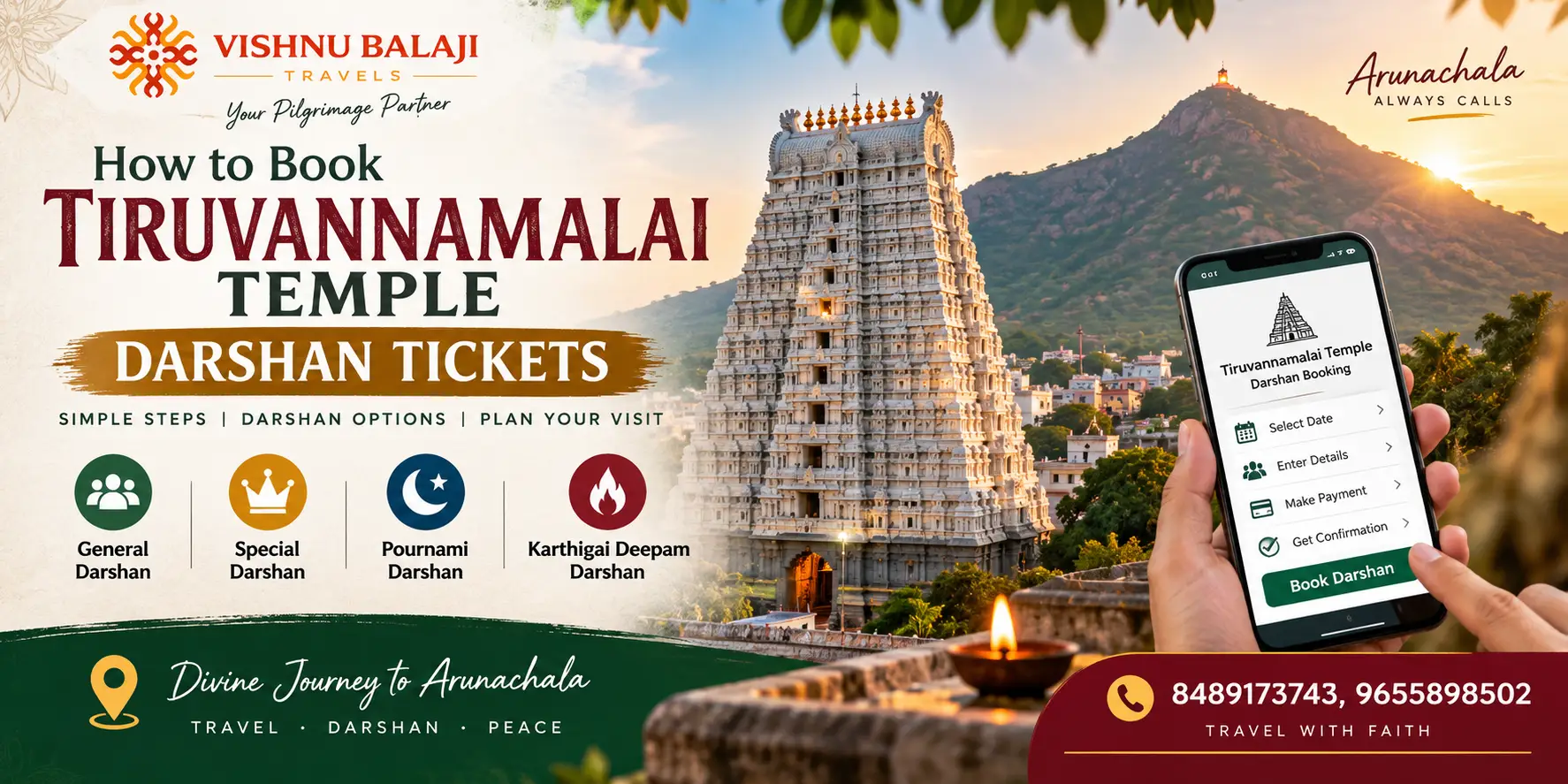
How to Book Tiruvannamalai Temple Darshan Tickets Visiting Tiruvannamalai is often planned around three important experiences—Annamalaiyar Temple darshan, worship at…

Best Time to Visit Tiruvannamalai Temple – Choose the Right Time for Your Trip There is no single perfect date…

Type of Tiruvannamalai Temple Darshan, Ticket Price – Complete Guide The Annamalaiyar Temple, also widely known as Arunachaleswarar Temple, is…

How to Book Arunachaleswarar Temple VIP Darshan Tickets Online Booking Devotees planning a visit to Tiruvannamalai often search for How…

Tiruvannamalai Temple Abhishekam and Pooja Details, Timings Arunachaleswarar Temple follows traditional daily poojas from early morning to night. Knowing the…

About Tiruvannamalai Temple Timings and Darshan Guide A visit to Tiruvannamalai is not simply about entering a temple and completing…

Tiruvannamalai is more than a temple destination. Along with the famous Arunachaleswarar Temple, travellers can visit peaceful ashrams, sacred hill…

Tiruvannamalai Temple Dress Code for Men and Women Arunachaleswarar Temple in Tiruvannamalai is one of Tamil Nadu’s most important Shiva…