






Thiruvithuvakkodu Divya Desam Guide | Timings & Darshan
Thiruvithuvakkodu Divya Desam Guide | Timings & Darshan By Vishnu Balaji Travels Thiruvithuvakkodu Divya Desam Guide | Timings & Darshan…




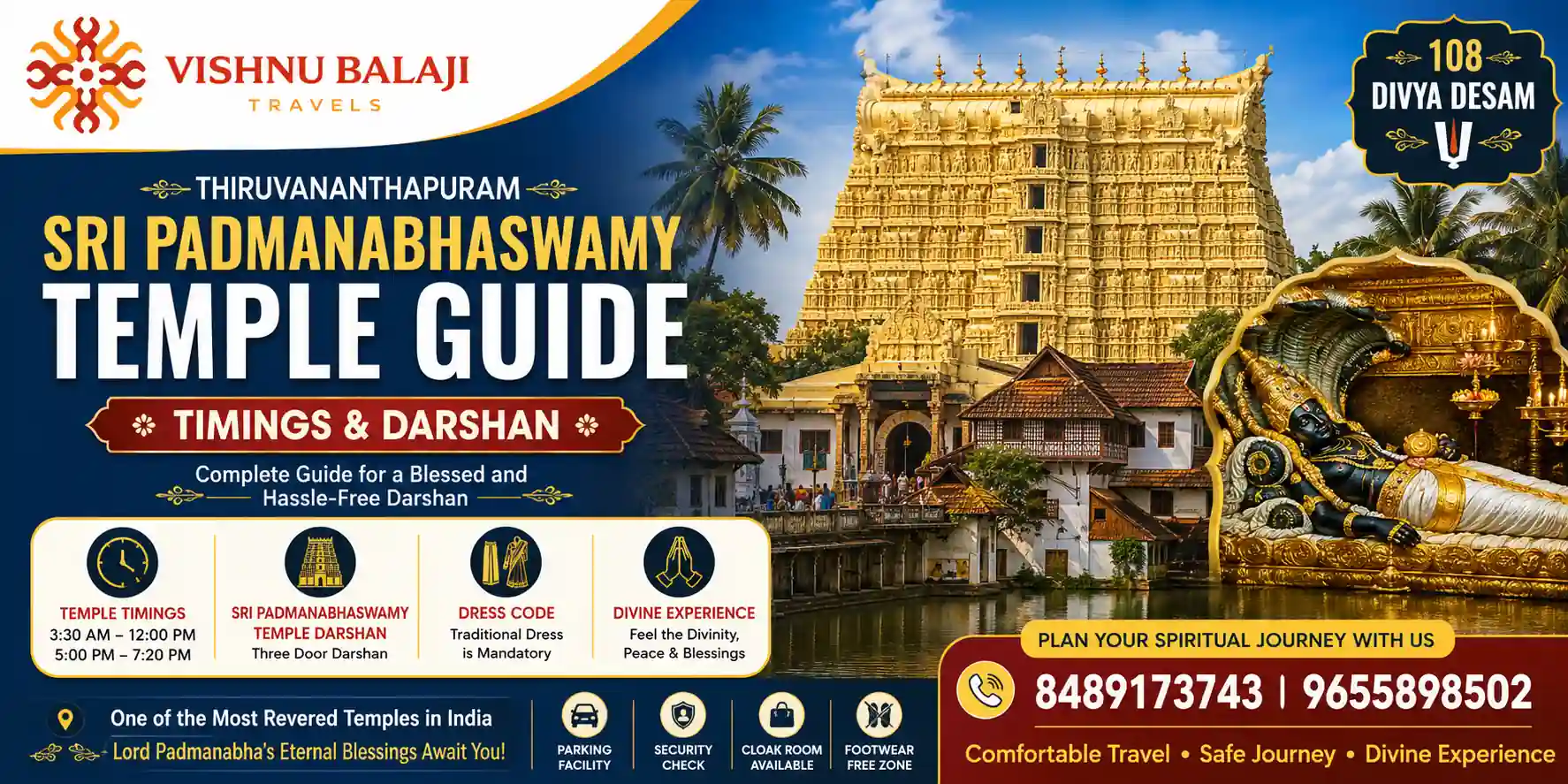
The Sri Padmanabhaswamy Temple Guide by Vishnu Balaji Travels is designed to help devotees and travelers plan a peaceful visit to one of India’s most sacred Vishnu temples. Located in the heart of Thiruvananthapuram, Kerala, the temple is one of the 108 Divya Desams and is dedicated to Lord Sri Padmanabha, a reclining form of Lord Maha Vishnu resting on the divine serpent Adisesha.
Known for its magnificent Dravidian and Kerala-style architecture, strict temple traditions, and rich history, the temple attracts lakhs of devotees every year. Whether you are visiting for the first time or including it in your Malainadu Divya Desam pilgrimage, this Sri Padmanabhaswamy Temple Guide provides all the essential information about Sri Padmanabhaswamy Temple timing, Sri Padmanabhaswamy Temple darshan, dress code, and visitor tips.
Sri Padmanabhaswamy Temple is one of the most revered Vaishnavite temples in South India. It is one of the 108 Divya Desams praised by the Alwars and has been an important pilgrimage destination for centuries.
The temple’s main deity, Lord Padmanabha, is seen in the unique Anantha Sayanam posture (reclining on Adisesha). Devotees view the Lord through three separate doors—showing His divine face, navel with the lotus emerging from it, and sacred feet.
The temple is also internationally known for its historic underground vaults and priceless treasures, making it one of the richest temples in the world.
This Sri Padmanabhaswamy Temple Guide is ideal for pilgrims seeking both spiritual fulfillment and practical travel information.
Knowing the Sri Padmanabhaswamy Temple timing helps you plan your darshan comfortably.
| Darshan Session | Timings |
|---|---|
| Morning Opening | 3:30 AM |
| Morning Darshan | 3:30 AM – 12:00 PM |
| Evening Opening | 5:00 PM |
| Evening Darshan | 5:00 PM – 7:20 PM |
Temple timings may vary slightly during festivals and special occasions.
This Sri Padmanabhaswamy Temple Guide recommends arriving at least 30–45 minutes before the preferred darshan session.
The Sri Padmanabhaswamy Temple darshan is a deeply spiritual experience. Devotees enter through beautifully carved corridors before reaching the sanctum.
Since the Lord is in a reclining posture, darshan is offered through three doors:
View of the divine face of Lord Padmanabha.
View of the lotus emerging from the Lord’s navel with Lord Brahma seated upon it.
View of the sacred feet of the Lord.
The unique three-door darshan makes this temple one of the most extraordinary Vishnu temples in India.
The temple follows a strict traditional dress code.
Traditional attire can also be rented near the temple entrance if required.
Before entering the temple:
Respecting these rules ensures a smooth Sri Padmanabhaswamy Temple darshan.
During your visit, don’t miss:
Major festivals include:
Festival days provide a vibrant spiritual atmosphere but also attract larger crowds.
The ideal months are:
Avoid visiting during the hot afternoon hours, especially in summer.
While visiting the temple, you can also explore:
To make the most of this Sri Padmanabhaswamy Temple Guide, follow these suggestions:
Trivandrum International Airport is approximately 6 km from the temple.
Thiruvananthapuram Central Railway Station is only about 1 km away.
Regular buses, taxis, and private cabs connect the temple with all major cities in Kerala and neighboring states.
Planning to visit all the sacred Divya Desam temples in Kerala? Vishnu Balaji Travels offers well-organized Malainadu Divyadesam Tour Packages covering Sri Padmanabhaswamy Temple along with other important Divya Desams in Kerala.
We provide customized pilgrimage tours from:
Our Malainadu Divyadesam tour packages include comfortable AC transportation, quality hotel accommodation, well-planned temple itineraries, and dedicated travel assistance, making your spiritual journey peaceful and convenient for families, senior citizens, and pilgrimage groups.
A visit to Sri Padmanabhaswamy Temple is not just a pilgrimage but a journey through centuries of devotion, architecture, and tradition. From the magnificent reclining form of Lord Padmanabha to the peaceful temple atmosphere, every moment offers a memorable spiritual experience.
This Sri Padmanabhaswamy Temple Guide provides complete information about Sri Padmanabhaswamy Temple timing, Sri Padmanabhaswamy Temple darshan, dress code, visitor rules, and travel tips to help you plan a hassle-free visit.
The regular morning darshan sessions are generally:
Darshan timings can change during festivals, special rituals and temple events. Devotees should check the official temple website before travelling.
Early morning is generally the best time for a peaceful darshan. Reaching before the selected darshan session also allows enough time for security checking, changing into traditional attire and depositing restricted belongings.
Regular temple entry is generally free. However, devotees may choose paid offerings, poojas or special services depending on availability. Charges and booking arrangements may change during special occasions.
Entry into the inner temple is traditionally permitted only to devotees who profess the Hindu faith. Visitors must also follow the temple’s prescribed customs and dress regulations.
Men are expected to wear a traditional mundu or dhoti and remove shirts before entering the main temple area. Women should wear traditional attire such as a saree, set mundu or other clothing permitted by the temple authorities. Traditional garments are commonly available near the entrance.
Mobile phones, cameras and photography equipment are generally not permitted inside the temple. Devotees should deposit restricted items at the available cloakroom or designated counters before entering.
Lord Padmanabha is worshipped in the Anantha Sayanam reclining posture. The long sacred form is viewed through three separate doors: the first offers a view of the face, the second reveals the central portion and lotus, and the third offers darshan of the divine feet.
Visitors should normally allow around one to three hours, depending on the crowd, security procedures, dress-change time and selected darshan session. Festival days may require more time.
The temple is located in the East Fort area of Thiruvananthapuram, Kerala. It is conveniently accessible from Thiruvananthapuram Central Railway Station and Trivandrum International Airport.
Yes. Sri Padmanabhaswamy Temple is revered as one of the 108 Divya Desams, the sacred Vishnu temples praised in the Tamil devotional hymns of the Alwars.
Senior citizens can visit the temple, but they should choose an early, less-crowded darshan session and avoid festival rush. Family members should allow sufficient time for walking, security checks and entry procedures.
Yes. Vishnu Balaji Travels offers customized Malainadu Divya Desam tour packages from Chennai, Nagercoil, Trivandrum, Bangalore, Madurai and Coimbatore, covering Sri Padmanabhaswamy Temple and other important Kerala Divya Desams.
Explore Popular Blog Posts Across Categories
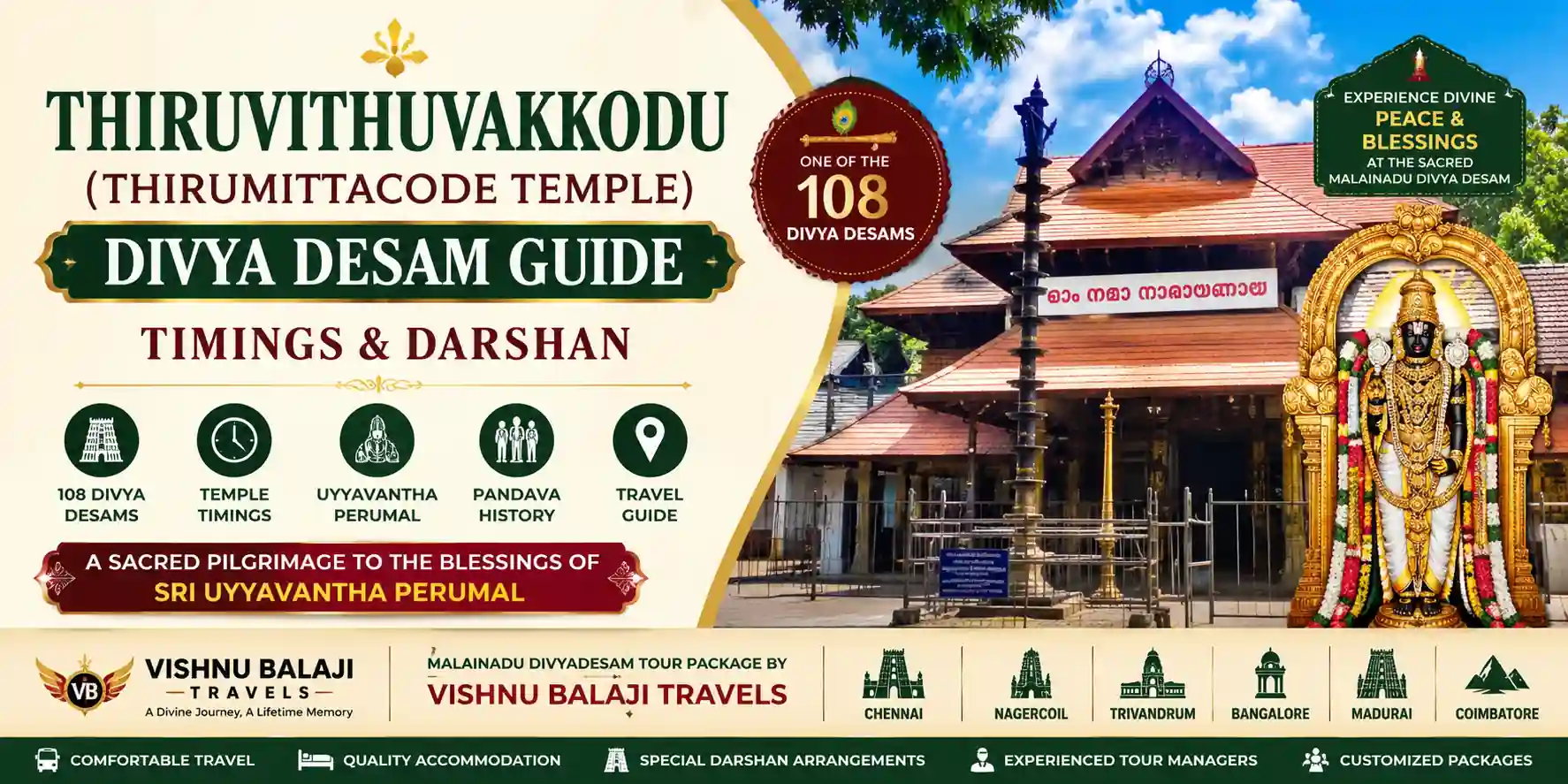
Thiruvithuvakkodu Divya Desam Guide | Timings & Darshan By Vishnu Balaji Travels Thiruvithuvakkodu Divya Desam Guide | Timings & Darshan…
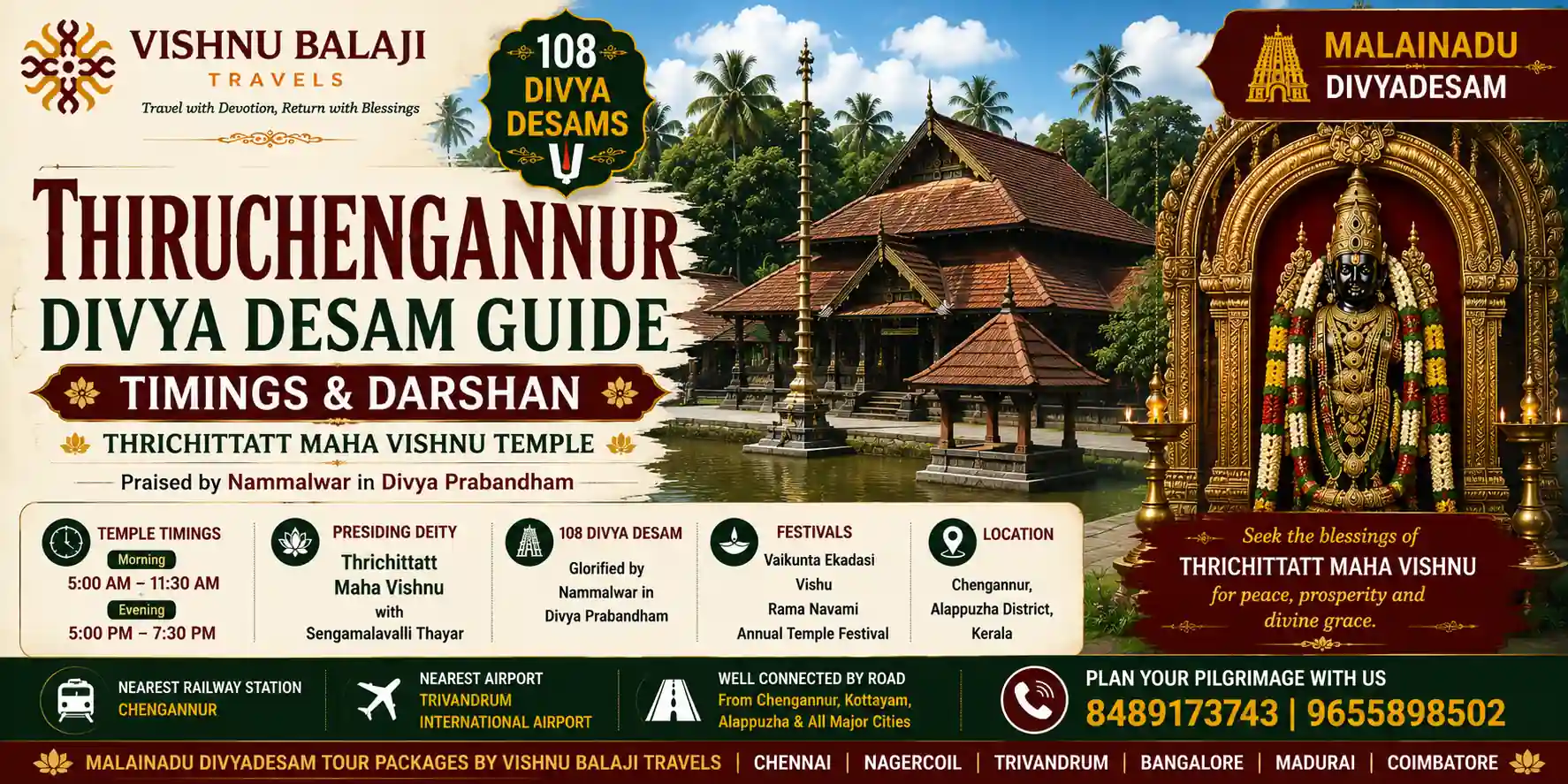
Thiruchengannur Divya Desam Guide | Timings & Darshan – Vishnu Balaji Travels Every Divya Desam has its own spiritual identity,…
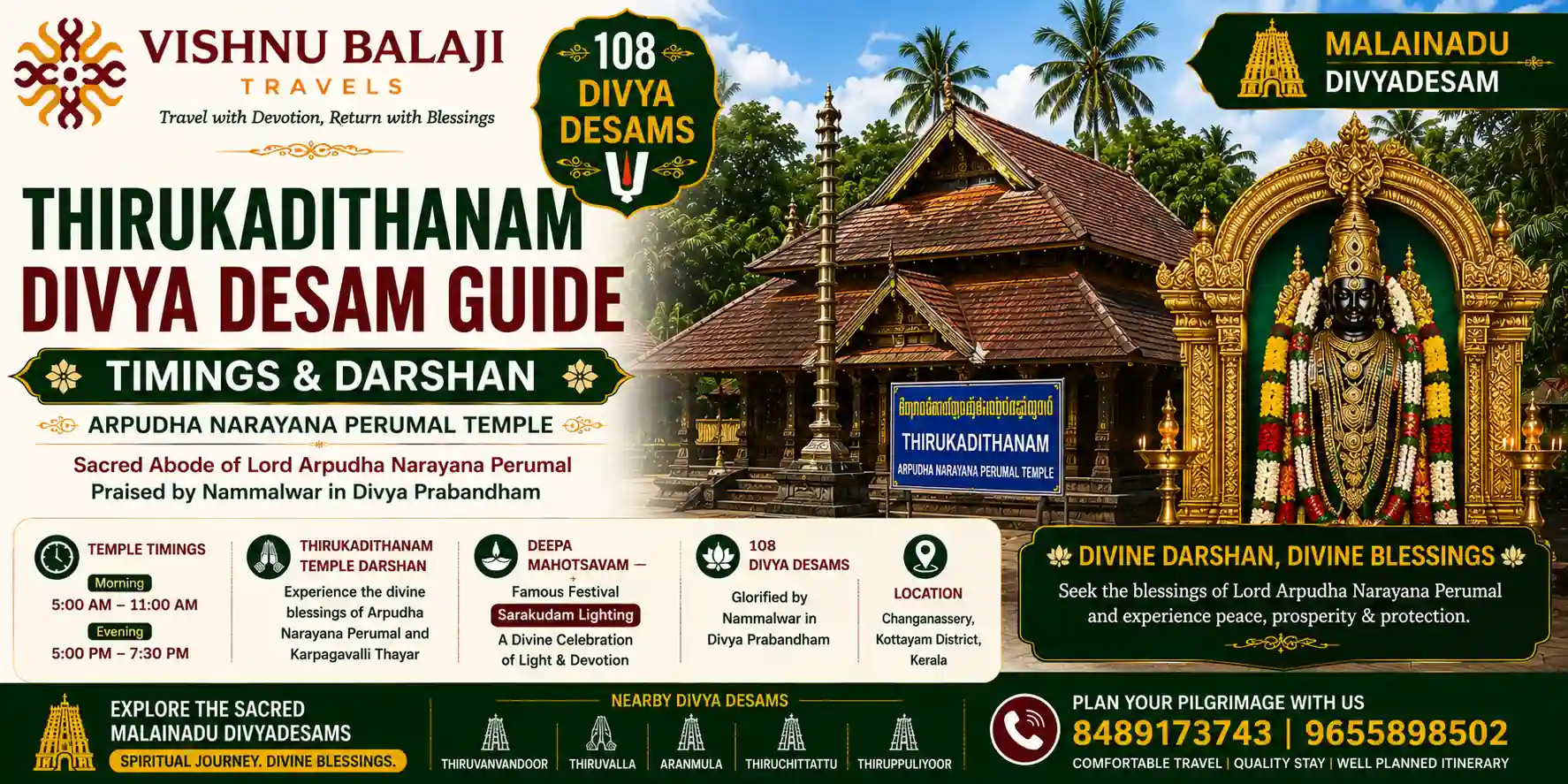
Thirukadithanam Divya Desam Guide | Timings & Darshan – Vishnu Balaji Travels Some temples are remembered for their grandeur, while…
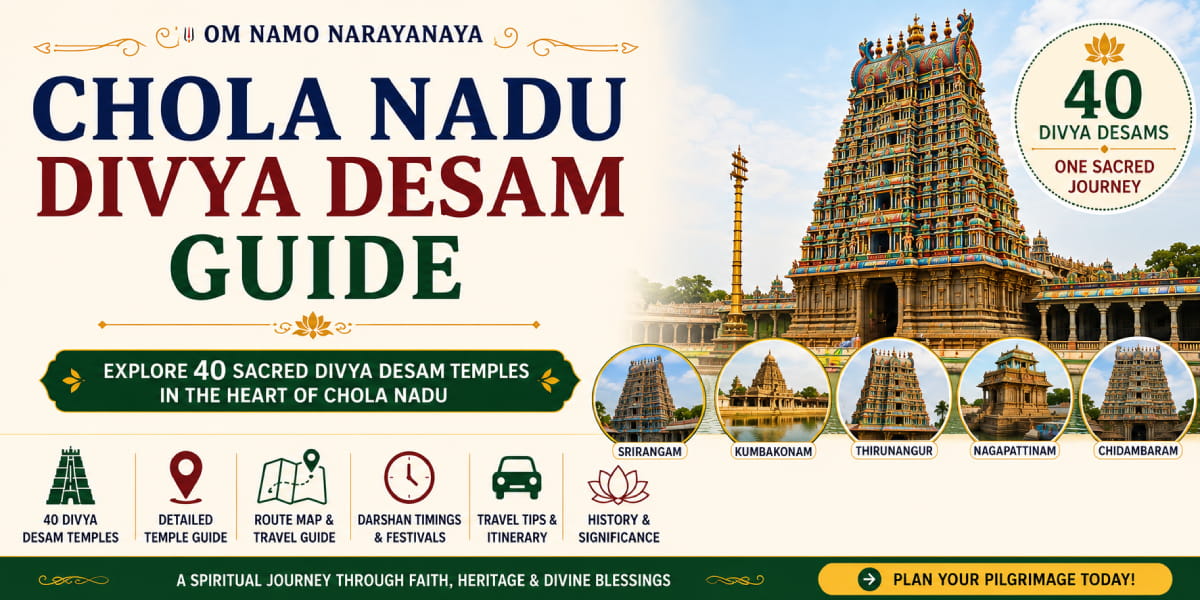
Planning a pilgrimage to the sacred Divya Desam temples of Tamil Nadu? Our Chola Nadu Divya Desam Guide is designed…
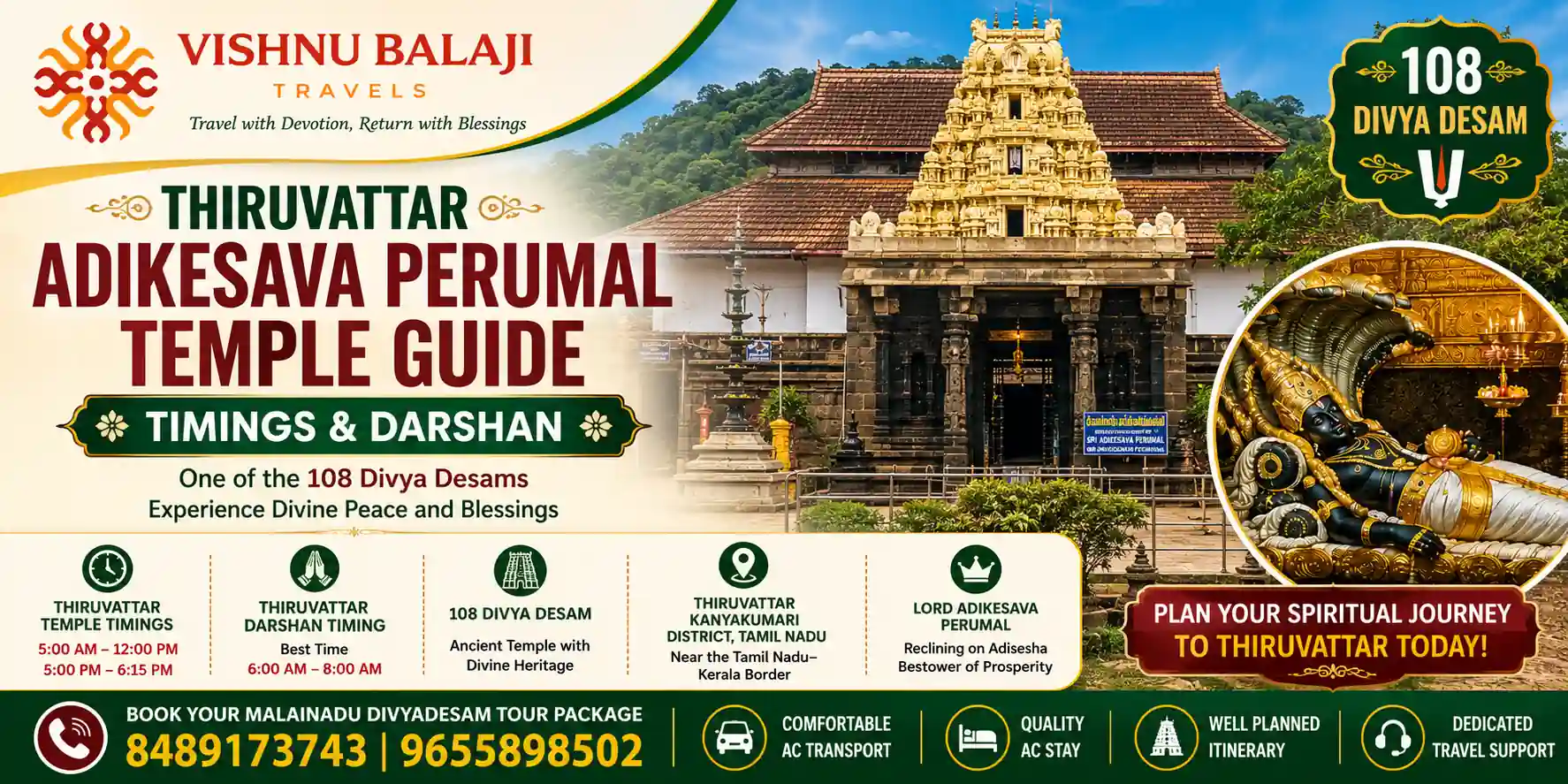
Thiruvattar Adikesava Perumal Temple Guide | Timings & Darshan The Thiruvattar Adikesava Perumal Temple Guide by Vishnu Balaji Travels is…
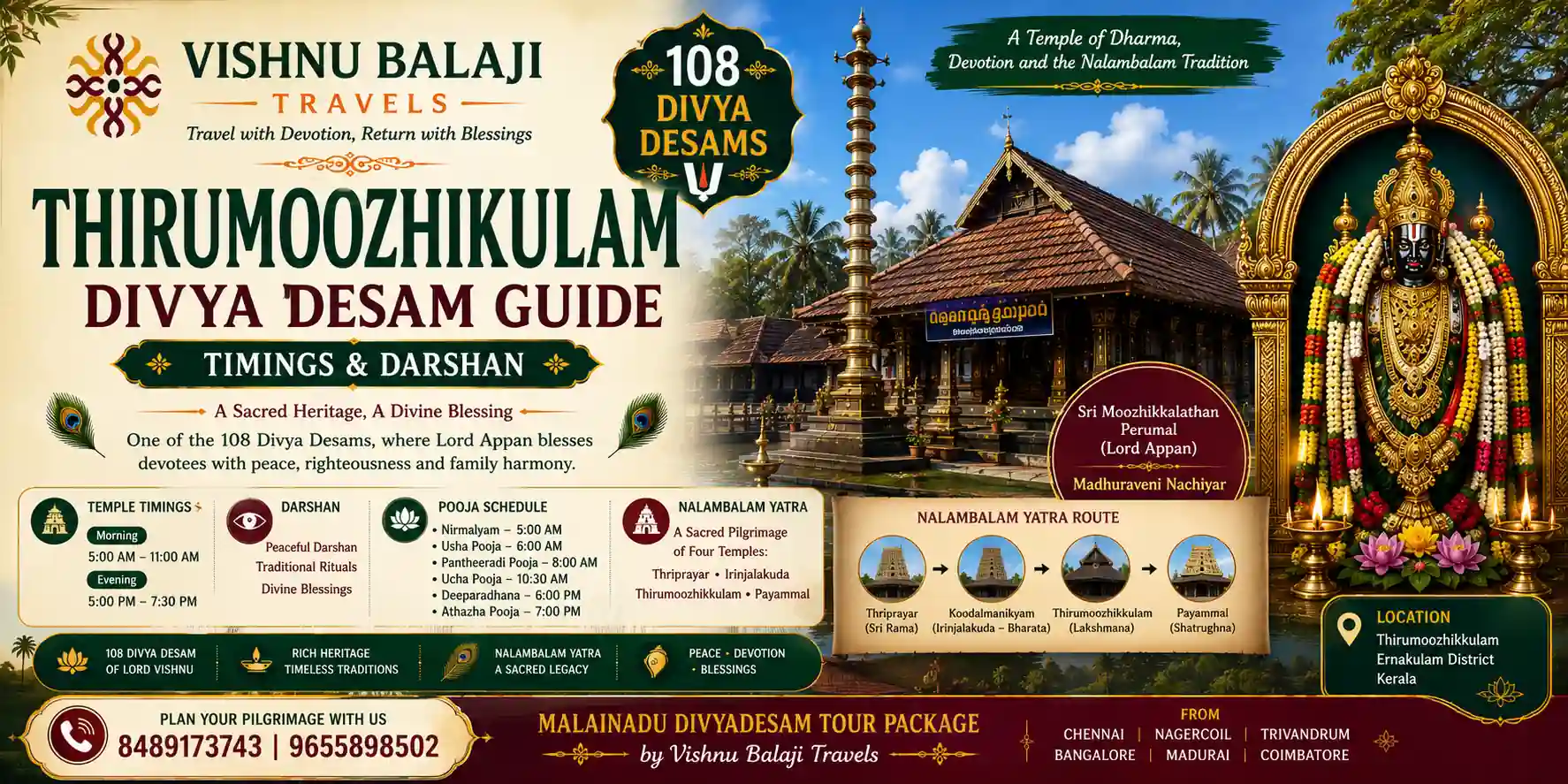
Thirumoozhikkulam Divya Desam Guide | Timings & Darshan – Vishnu Balaji Travels A Sacred Temple of Harmony, Dharma and Devotion…
The Chola Nadu Divya Desam Temples are among the most sacred pilgrimage destinations for Sri Vaishnava devotees. Located across the…
The 108 Divya Desam temples are the most sacred pilgrimage destinations dedicated to Lord Vishnu, glorified in the Divya Prabandham…