






Meenakshi Temple Night Ceremony | Palliyarai Pooja
Meenakshi Temple Night Ceremony | Palliyarai Pooja By Vishnu Balaji Travels The Meenakshi Temple Night Ceremony | Palliyarai Pooja is…




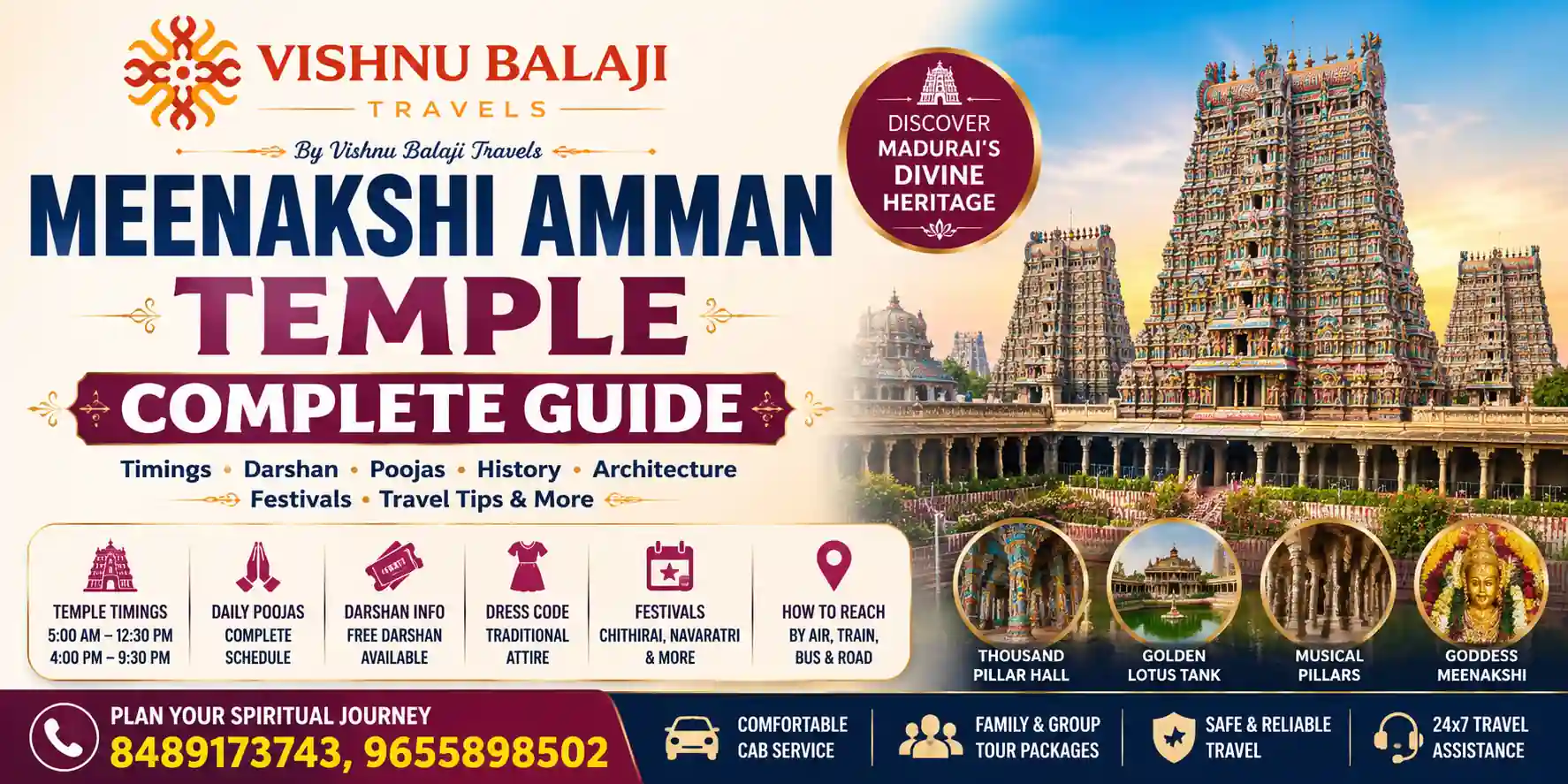
If you are planning a spiritual journey to Madurai, this Meenakshi Amman Temple Complete Guide will help you prepare for your visit. From temple history and Meenakshi Amman Temple timing to darshan details, dress code, festivals, architecture, and travel tips, this guide covers everything you need to know before visiting one of India’s most iconic temples.
The Meenakshi Amman Temple is not only a sacred place of worship but also a masterpiece of Dravidian architecture, attracting millions of devotees and tourists from around the world every year.
The Meenakshi Amman Temple is located in the heart of Madurai, Tamil Nadu, and is dedicated to Goddess Meenakshi, an incarnation of Goddess Parvati, and Lord Sundareswarar, a form of Lord Shiva.
The temple is believed to have existed for over 2,000 years, while the present-day structures were largely rebuilt and expanded during the reign of the Nayak kings in the 16th and 17th centuries. Today, it stands as one of the most important Shiva temples in South India and is a symbol of Madurai’s rich spiritual and cultural heritage.
Ancient Tamil literature and the Tiruvilaiyadal Puranam describe Madurai as a sacred city blessed by Lord Shiva himself.
The temple has undergone several renovations over the centuries, especially under King Tirumalai Nayak and Ariyanatha Mudaliar, who added magnificent halls, towering gopurams, and intricate sculptures that continue to amaze visitors today.
According to legend, Princess Meenakshi was born with three breasts. A divine prophecy declared that the extra breast would disappear when she met her future husband. When she first saw Lord Shiva in the form of Sundareswarar, the prophecy came true, symbolizing divine destiny and sacred union.
The name Meenakshi means “Fish-Eyed Goddess.” Just as a fish constantly watches over its young, Goddess Meenakshi is believed to lovingly protect her devotees with her ever-watchful eyes.
The idol of Goddess Meenakshi is traditionally decorated with a distinctive green complexion. Green symbolizes prosperity, fertility, compassion, and the nurturing power of nature, making it one of the temple’s unique spiritual features.
Although popularly called the Thousand Pillar Hall, the hall actually contains 985 beautifully carved pillars, each displaying extraordinary sculptures of deities, celestial beings, animals, and scenes from Hindu mythology.
Some granite pillars inside the temple produce different musical notes when gently tapped. These musical pillars demonstrate the remarkable engineering skills of ancient South Indian artisans.
Every twelve years, the temple’s colorful gopurams are repainted and restored during the sacred Kumbabishekam ceremony, preserving their vibrant beauty for future generations.
| Temple Activity | Timing |
|---|---|
| Temple Opening | 5:00 AM |
| Morning Darshan | 5:00 AM – 12:30 PM |
| Temple Reopens | 4:00 PM |
| Evening Darshan | 4:00 PM – 9:30 PM |
| Temple Closing | 9:30 PM |
Note: The Meenakshi Amman Temple timing may vary during festivals and special occasions.
| Pooja | Approximate Time |
|---|---|
| Thiruvanandal Pooja | 5:00 AM |
| Vizha Pooja | 6:30 AM |
| Kalasanthi Pooja | 7:30 AM |
| Thrikala Sandhi | 10:30 AM |
| Uchikala Pooja | 12:00 Noon |
| Sayaraksha Pooja | 5:30 PM |
| Ardhajama Pooja | 9:00 PM |
Devotees can enjoy free darshan throughout the day. During weekends, public holidays, and festivals, waiting times may be longer. Special darshan options may also be available on selected days.
The temple complex covers approximately 15 acres and features:
Every corner of the temple reflects the brilliance of Dravidian architecture.
The temple celebrates several grand festivals throughout the year.
Major festivals include:
Among them, the Chithirai Festival is the largest and attracts lakhs of devotees.
Traditional attire is recommended.
Avoid wearing revealing or inappropriate clothing inside the temple.
Madurai International Airport is about 12 km from the temple.
Madurai Junction Railway Station is approximately 1.5 km away.
Frequent government and private buses connect Madurai with Chennai, Coimbatore, Tiruchirappalli, Bengaluru, Tirunelveli, and other major cities.
The best months to visit are:
Early morning darshan offers a peaceful spiritual experience with fewer crowds.
Explore Madurai’s sacred temples with Vishnu Balaji Travels.
Our temple tour packages include:
We provide:
The Meenakshi Amman Temple is far more than a place of worship. It is a living heritage monument that beautifully combines spirituality, mythology, architecture, and centuries-old traditions. Whether you are visiting for darshan, photography, history, or cultural exploration, this Meenakshi Amman Temple Complete Guide ensures that your pilgrimage is well planned and spiritually enriching.
The Meenakshi Amman Temple is generally open from 5:00 AM to 12:30 PM and again from 4:00 PM to 9:30 PM. Timings may vary during festivals and special occasions.
No. General darshan at Meenakshi Amman Temple is free for all devotees. However, separate charges may apply for special darshan, museum entry, or special poojas.
The ideal time to visit is between October and March, when the weather is pleasant. Early morning darshan is recommended for a peaceful experience with fewer crowds.
Traditional and modest clothing is recommended. Men can wear dhoti, kurta, or full-length pants, while women can wear sarees, salwar kameez, chudidhar, or other modest traditional attire.
Yes. Devotees can use the official temple website for selected services, special poojas, and darshan-related bookings whenever available.
Most visitors spend 2 to 3 hours exploring the temple, attending darshan, and visiting attractions such as the Thousand Pillar Hall, Golden Lotus Tank, and temple museum.
Major attractions include the sanctums of Goddess Meenakshi and Lord Sundareswarar, the Thousand Pillar Hall, Golden Lotus Tank, Musical Pillars, Mukkuruni Vinayagar, and the beautifully sculpted gopurams.
The name Meenakshi means “Fish-Eyed Goddess.” According to Hindu tradition, just as a fish constantly watches over its young, Goddess Meenakshi lovingly protects and blesses her devotees with her compassionate gaze.
The Chithirai Festival, especially the celestial wedding (Meenakshi Thirukalyanam) of Goddess Meenakshi and Lord Sundareswarar, is the temple’s grandest annual celebration and attracts lakhs of devotees.
Pilgrims often combine their visit with nearby temples such as Thiruparankundram Murugan Temple, Pazhamudircholai Murugan Temple, Alagar Kovil, Koodal Azhagar Temple, and Thirumogur Kalamegaperumal Temple.
Explore Popular Blog Posts Across Categories
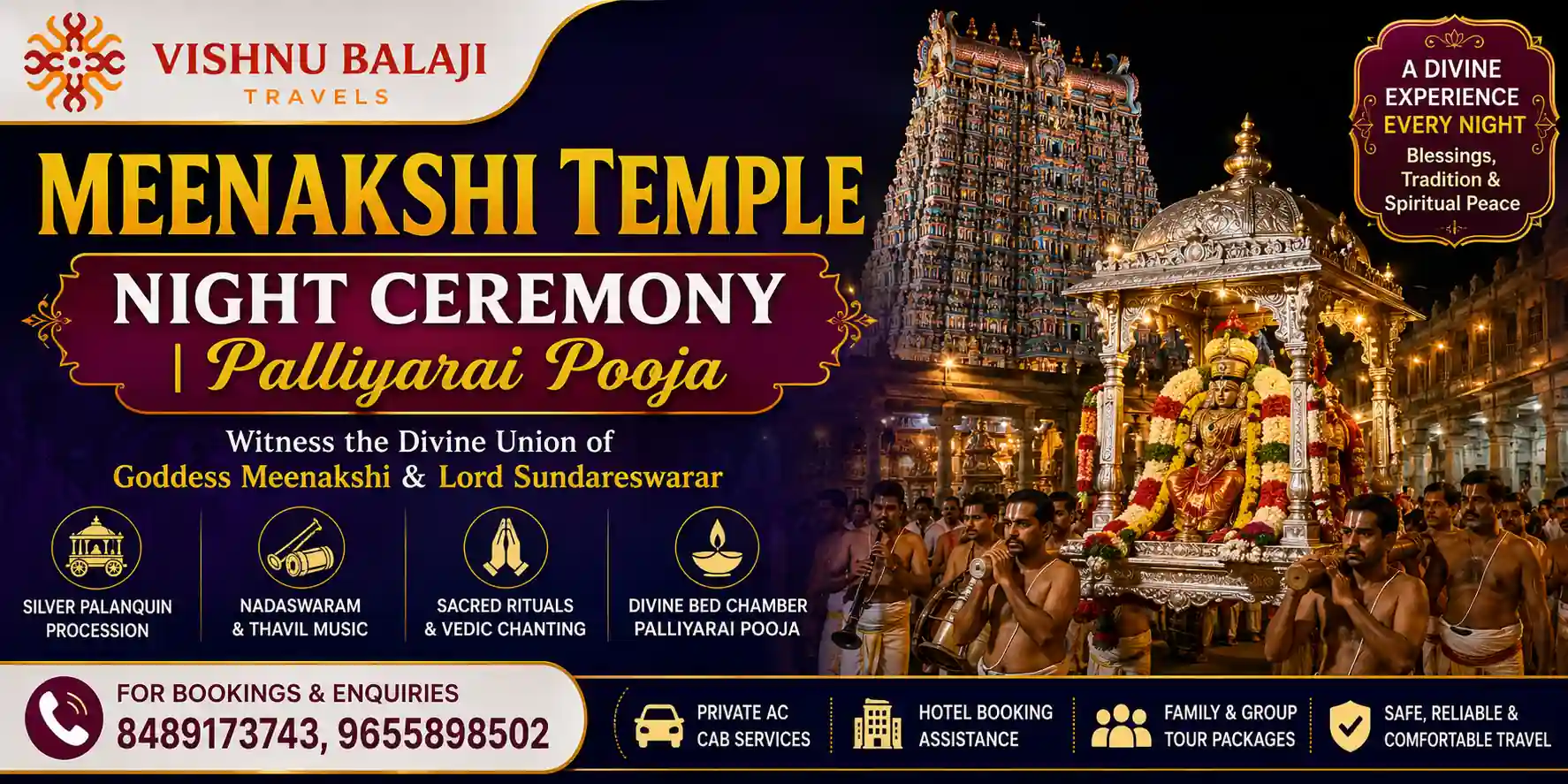
Meenakshi Temple Night Ceremony | Palliyarai Pooja By Vishnu Balaji Travels The Meenakshi Temple Night Ceremony | Palliyarai Pooja is…

Madurai Rameshwaram Kanyakumari Tour for NRI – Complete Temple Tour Guide Planning a spiritual journey to Tamil Nadu while visiting…
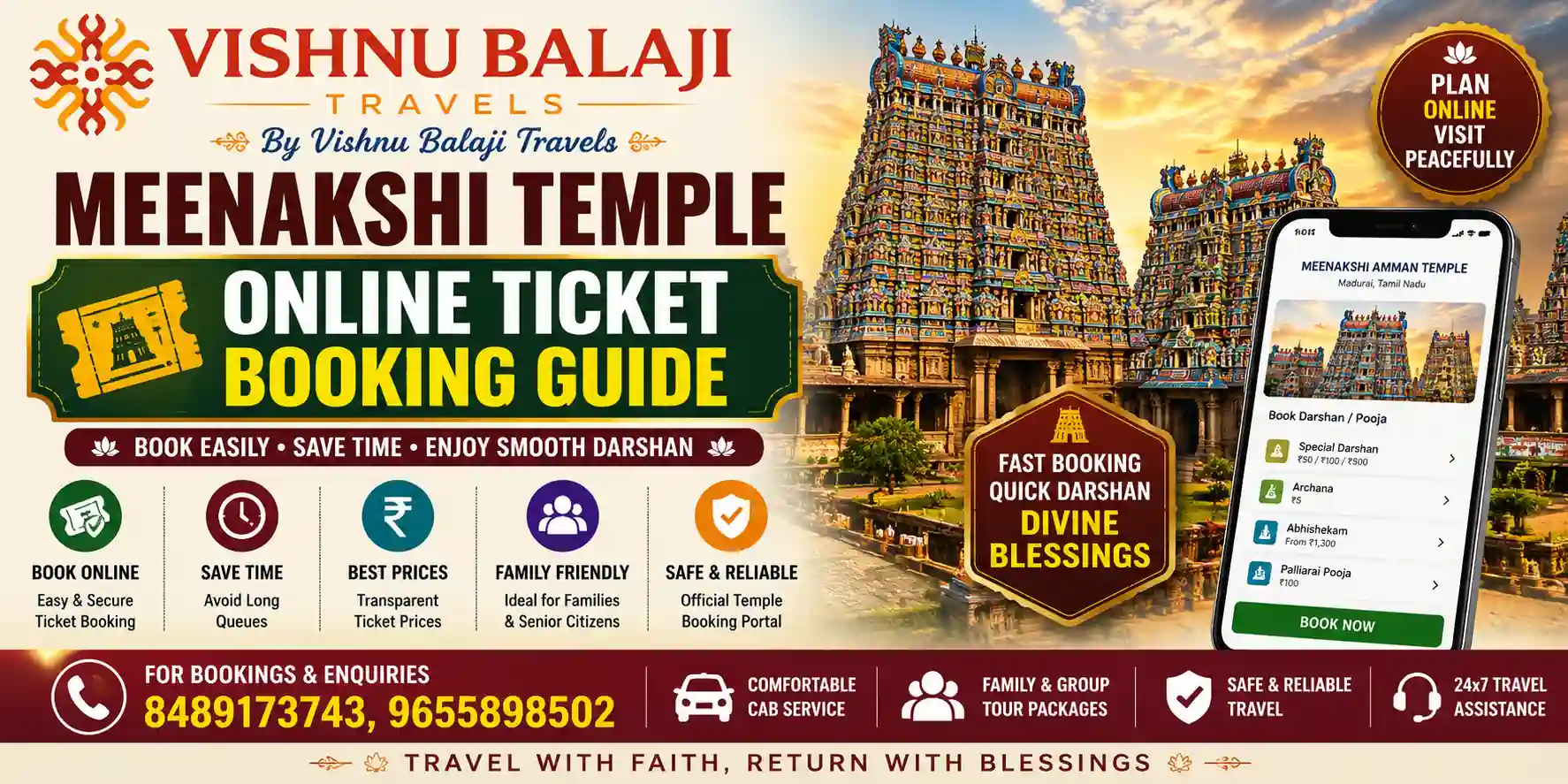
Meenakshi Temple Online Ticket Booking Guide By Vishnu Balaji Travels Planning your visit in advance can help you enjoy a…
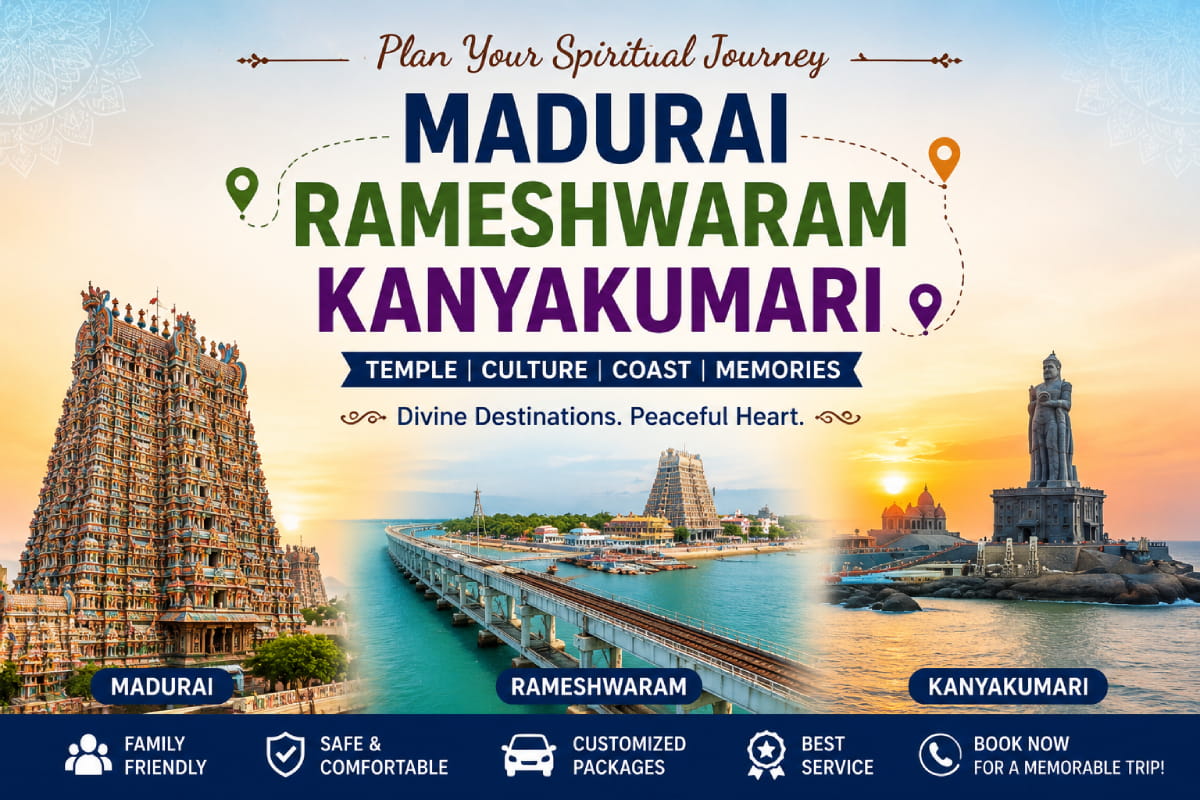
Planning a spiritual and scenic journey across South Tamil Nadu is one of the most memorable travel experiences for families,…
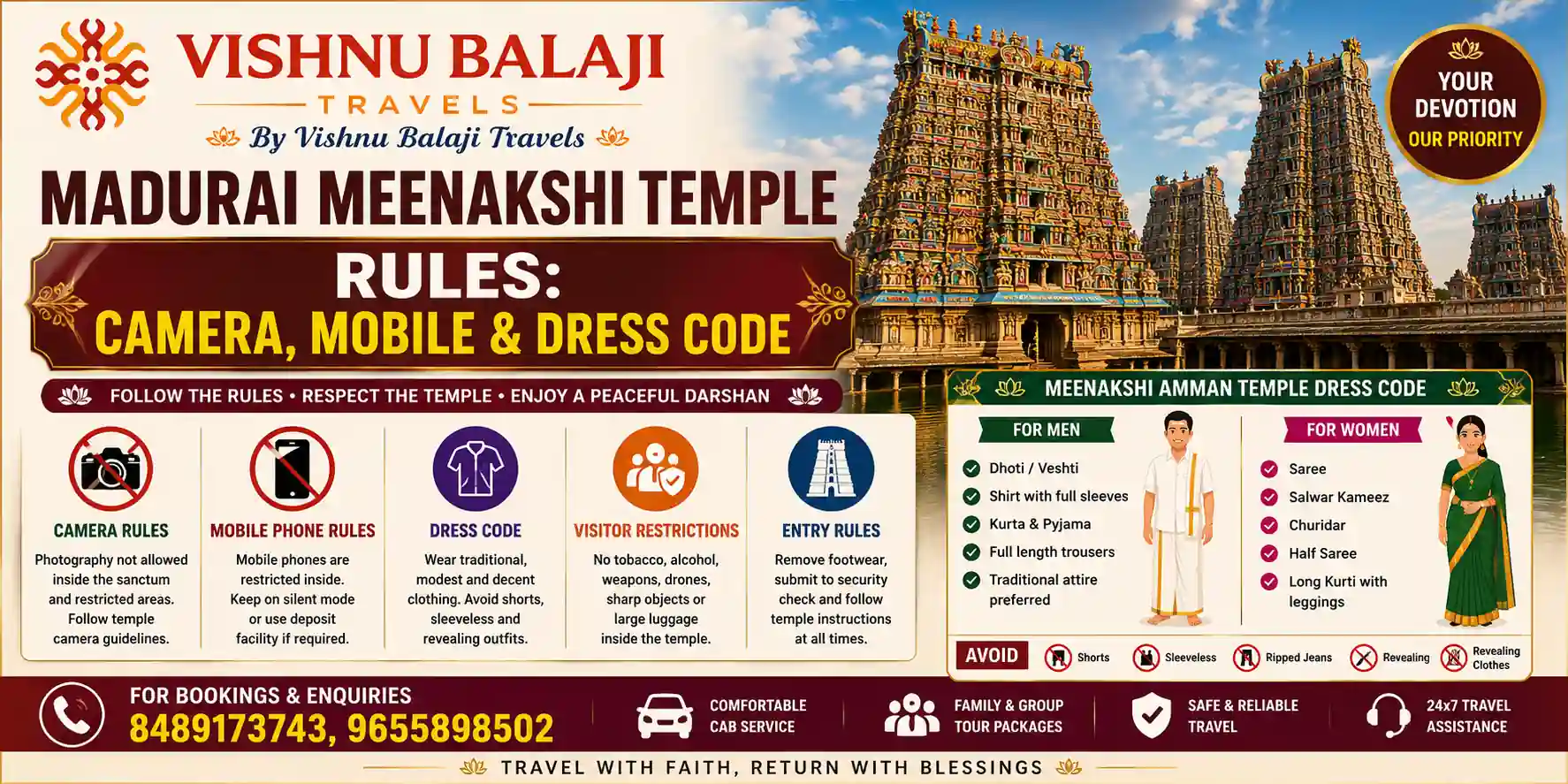
Madurai Meenakshi Temple Rules: Camera, Mobile & Dress Code By Vishnu Balaji Travels Visiting the Madurai Meenakshi Amman Temple is…
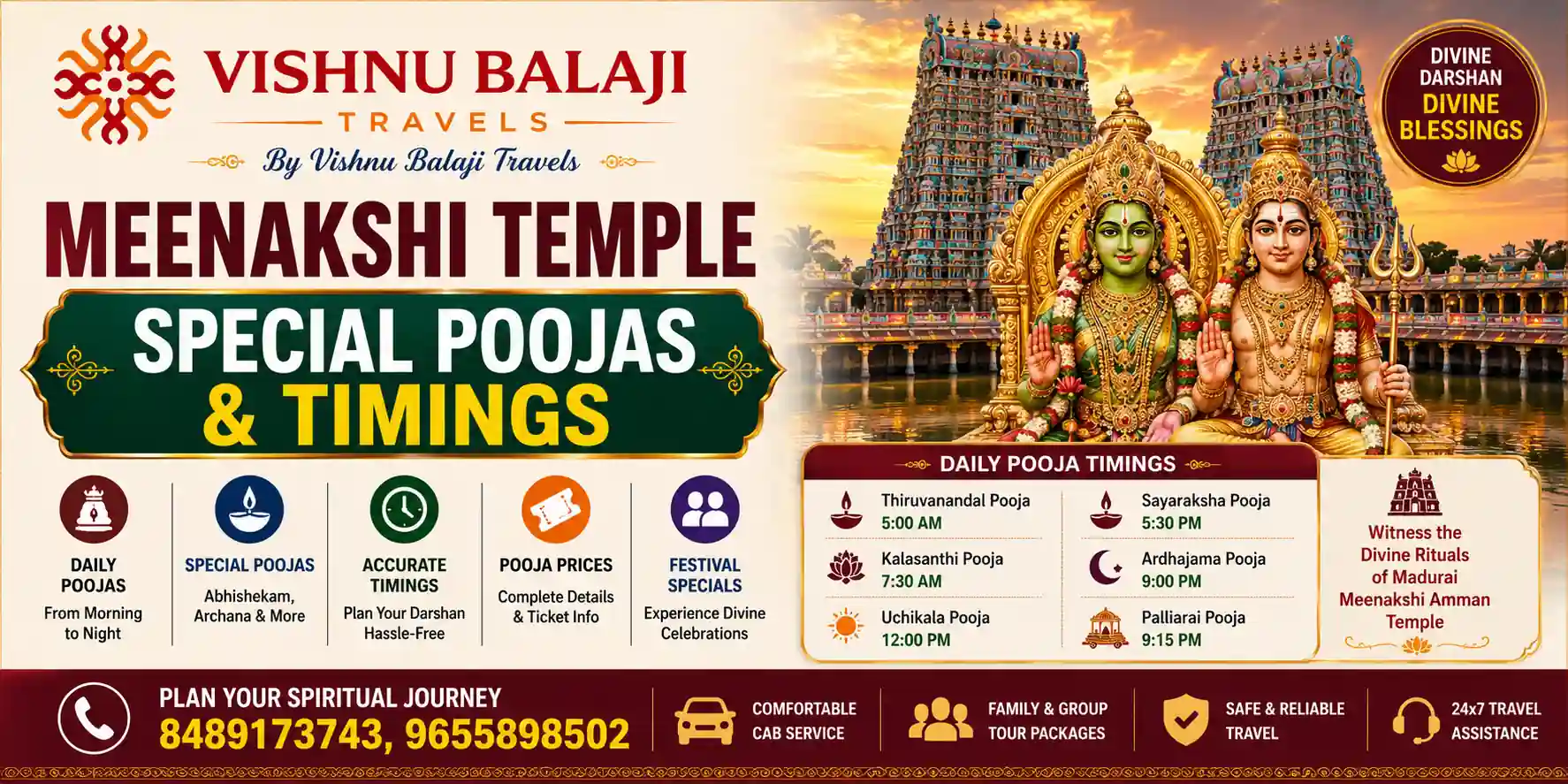
Meenakshi Temple Special Poojas & Timings By Vishnu Balaji Travels The Meenakshi Temple Special Poojas & Timings are an important…

Madurai Rameswaram Family Tour Package By Vishnu Balaji Travels A family holiday becomes truly memorable when it combines spirituality, culture,…
Madurai Temples List & Timings – Famous Temples in Madurai Madurai is a city where temple visits can be planned…