









Kanchipuram Temples List & Timings
Kanchipuram Temples List & Timings By Vishnu Balaji Travels Kanchipuram is one of Tamil Nadu’s most important pilgrimage destinations, known…




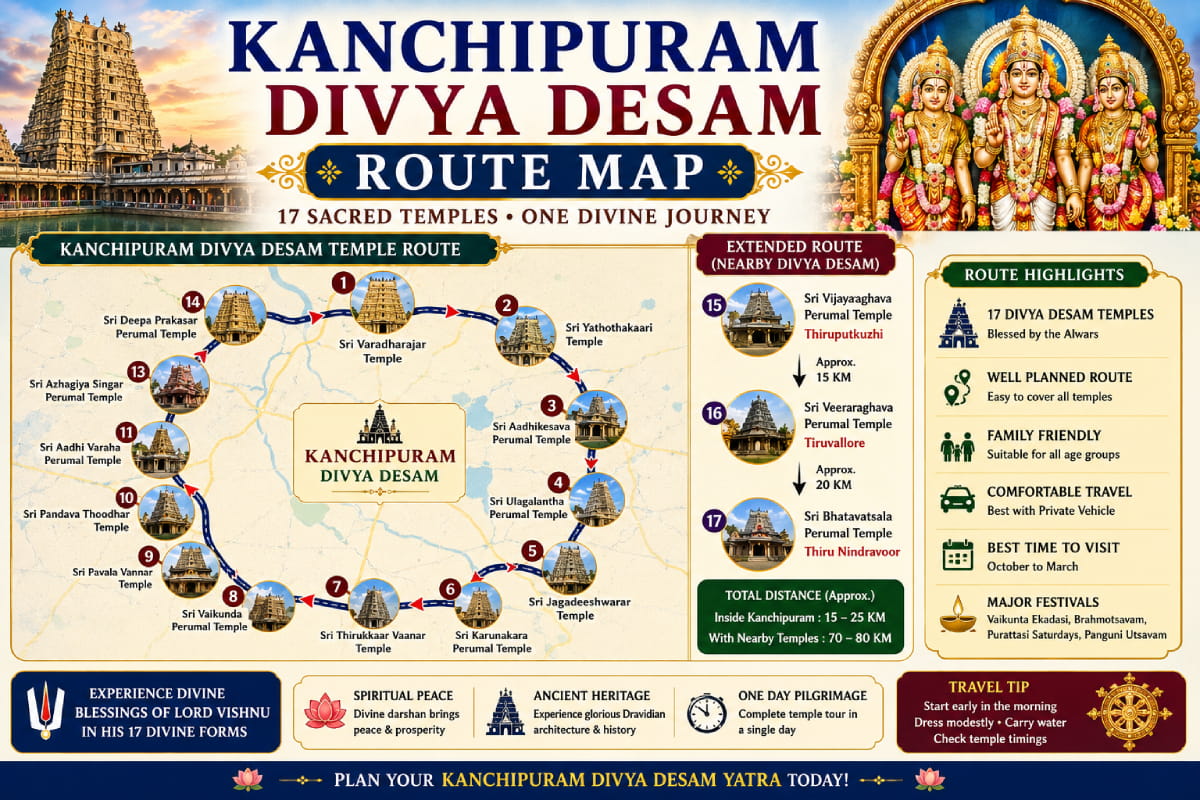
Kanchipuram is one of the most sacred Vaishnavite pilgrimage cities in Tamil Nadu and is home to several ancient Divya Desam temples praised by the Alwars. The Kanchipuram Divya Desam Route Map helps devotees plan a systematic and comfortable temple pilgrimage covering important Vishnu temples within and around Kanchipuram.
Most temples are located within short travel distance, making the pilgrimage ideal for:
| Route Order | Temple Name |
|---|---|
| 1 | Sri Varadharajar Temple |
| 2 | Sri Yathothakaari Temple |
| 3 | Sri Aadhikesava Perumal Temple |
| 4 | Sri Ulagalantha Perumal Temple |
| 5 | Sri Jagadeeshwarar Temple |
| 6 | Sri Karunakara Perumal Temple |
| 7 | Sri Thirukkaar Vaanar Temple |
| 8 | Sri Vaikunda Perumal Temple |
| 9 | Sri Pavala Vannar Temple |
| 10 | Sri Pandava Thoodhar Temple |
| 11 | Sri Nilathingal Thundathan Perumal Temple |
| 12 | Sri Aadhi Varaha Perumal Temple |
| 13 | Sri Azhagiya Singar Perumal Temple |
| 14 | Sri Deepa Prakasar Perumal Temple |
| 15 | Sri Vijayaraghava Perumal Temple |
| 16 | Sri Veeraraghava Perumal Temple |
| 17 | Sri Bhatavatsala Perumal Temple |
| Travel Segment | Distance |
|---|---|
| Chennai to Kanchipuram | Approx. 75 KM |
| Internal Temple Travel | Approx. 15–25 KM |
| Nearby Divya Desam Coverage | Additional 40–60 KM |
Many pilgrims choose organized tours because they provide:
The Kanchipuram Divya Desam Route Map helps devotees experience a spiritually fulfilling journey through some of the most sacred Vishnu temples in Tamil Nadu. With ancient temple heritage, peaceful darshan atmosphere, and well-connected temple routes, the Kanchipuram Divya Desam pilgrimage remains one of the most important spiritual tours for Sri Vaishnavite devotees.
Most pilgrims cover:
depending on available travel time.
Yes, most important temples inside Kanchipuram can be covered in one full day with proper route planning and early morning darshan.
Most devotees begin the pilgrimage from:
Sri Varadharajar Temple
because it is one of the most important and largest Divya Desam temples in Kanchipuram.
Private transportation is highly recommended:
This helps devotees comfortably cover multiple temples without travel delays.
Most temples are located within short travel distance inside Kanchipuram town, making temple hopping easier for devotees.
Early morning between: 6:00 AM to 7:00 AM and is considered ideal for peaceful darshan and better time management.
The best season is: October to March
when the climate remains pleasant for temple visits and sightseeing.
No, temple opening and closing timings may vary. Some temples close during afternoon hours and reopen in the evening.
Yes, most temples are easily accessible and suitable for:
Traditional attire is preferred in most temples. Devotees are advised to wear respectful clothing during darshan.
Yes, many pilgrims include nearby temples such as:
for an extended Divya Desam pilgrimage.
Important festival periods include:
These festivals attract large numbers of devotees.
Many pilgrims choose organized tours because they provide:
The internal temple route usually covers:
Additional nearby Divya Desam temples may increase total travel distance.
The Kanchipuram Divya Desam pilgrimage is spiritually significant because these temples are praised by the Alwars and represent ancient Sri Vaishnavite traditions, divine Vishnu worship, and historic Dravidian temple heritage.
Explore Popular Blog Posts Across Categories

Kanchipuram Temples List & Timings By Vishnu Balaji Travels Kanchipuram is one of Tamil Nadu’s most important pilgrimage destinations, known…
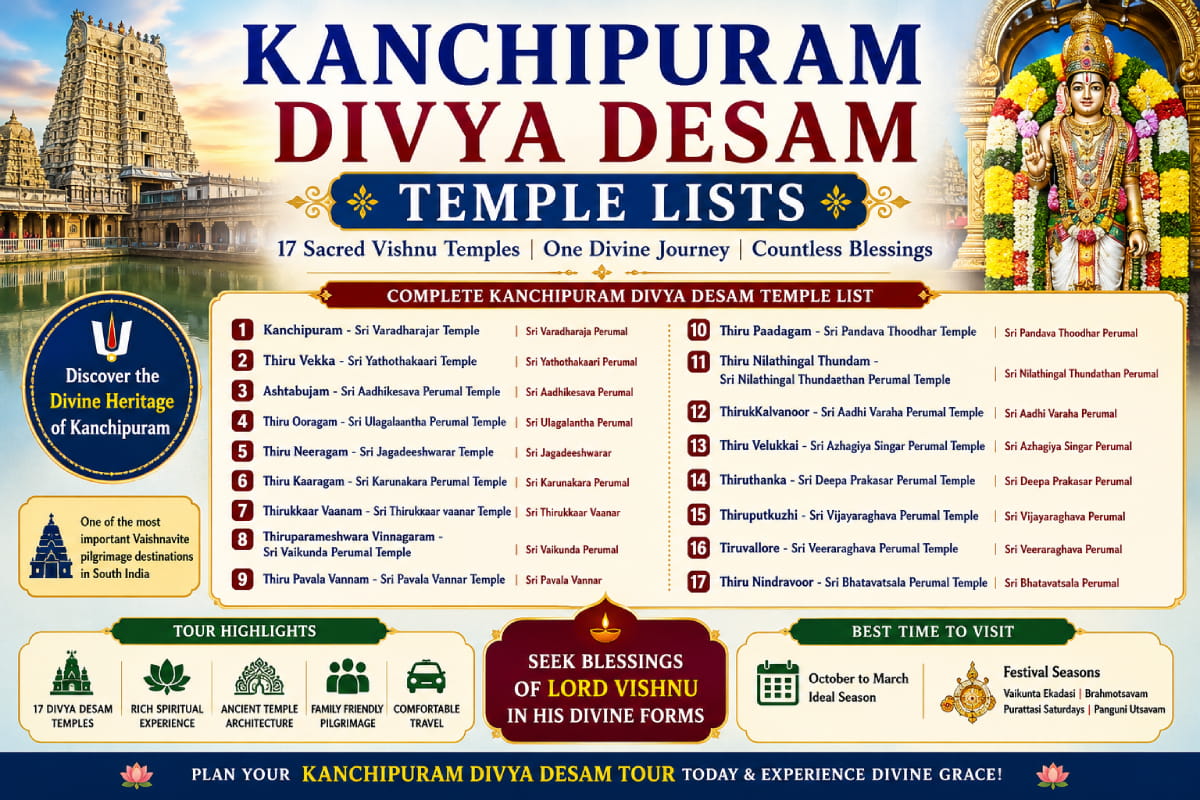
Kanchipuram is one of the most sacred spiritual cities in Tamil Nadu and an important pilgrimage destination for Sri Vaishnavites….