









Sri Ammainathar Temple Gudie – Timings & History
Sri Ammainathar Temple Guide – Timings & History By Vishnu Balaji Travels Located on the sacred banks of the Thamirabarani…





The Nava Kailasam Temple Dress Code and Visitor Guide helps devotees prepare appropriately for visiting the nine sacred Shiva temples located along the Thamirabarani River region. As these are traditional places of worship, visitors are expected to wear modest clothing, respect temple customs and maintain a peaceful atmosphere throughout the pilgrimage.
Vishnu Balaji Travels recommends choosing comfortable traditional attire because a Nava Kailasam visit involves entering multiple temples and travelling between different temple locations.
There may not be one identical written dress-code rule displayed at every Nava Kailasam temple. However, devotees should follow modest and respectful clothing practices suitable for Shiva temples.
Men can preferably wear:
Avoid shorts, sleeveless clothing and outfits that may be considered unsuitable for a place of worship.
Women can preferably wear:
Avoid shorts, short skirts, sleeveless or revealing outfits while visiting the temples.
Children should also be dressed comfortably and appropriately for temple visits.
Suitable choices include:
Footwear should be removed before entering the permitted temple areas.
Since devotees may remove their footwear several times while covering all nine temples, simple and comfortable footwear is more practical.
Photography and mobile-phone rules can differ between temples and particular areas within a temple.
Visitors should:
The Nava Kailasam Temple Visitor Guide is not only about clothing. Respectful behaviour is equally important when visiting the nine temples.
Keep your belongings simple because you will be entering several temples during the journey.
Useful items to carry:
Avoid carrying unnecessary luggage into temple premises.
Senior citizens visiting Nava Kailasam should choose lightweight, comfortable clothing suitable for both temple darshan and road travel.
Families travelling with children should keep the temple visit comfortable while maintaining proper temple etiquette.
| Visitor Requirement | Recommended Practice |
|---|---|
| Men’s Clothing | Dhoti, veshti, shirt or full-length trousers |
| Women’s Clothing | Saree, salwar, churidar or modest traditional wear |
| Children’s Clothing | Comfortable and modest clothing |
| Footwear | Remove before entering designated temple areas |
| Mobile Phones | Keep on silent mode |
| Photography | Follow individual temple restrictions |
| Temple Behaviour | Quiet and respectful |
| Personal Items | Carry only essentials |
| Senior Citizens | Comfortable clothing, footwear and necessary medicines |
Following the Nava Kailasam Temple Dress Code and basic temple etiquette makes it easier to visit the nine shrines respectfully and comfortably. This Nava Kailasam Temple Visitor Guide from Vishnu Balaji Travels can be used as a simple checklist when preparing for the complete Nava Kailasam pilgrimage.
Devotees should wear modest and respectful clothing suitable for traditional Shiva temples. Traditional Indian attire is generally a comfortable choice.
Men can wear a dhoti, veshti with a shirt, or full-length trousers with a decent shirt. Shorts and inappropriate clothing should be avoided.
Women can wear sarees, salwar kameez, churidars, kurtas with full-length bottoms or other modest traditional clothing.
Dress requirements can vary by temple. Visitors should choose modest full-length clothing and follow any specific instructions displayed at each temple.
No. Footwear should be removed before entering areas where it is prohibited. Visitors should use the available or designated footwear areas where provided.
Rules may differ between temples. Keep mobile phones on silent mode and follow any restrictions displayed or communicated by temple authorities.
Photography rules can vary. Avoid taking photographs inside sanctums or restricted areas and always follow the instructions at each temple.
Senior citizens should choose modest, lightweight and comfortable clothing that is easy to manage during repeated temple visits and road travel.
Carry drinking water, necessary medicines, essential personal items and comfortable footwear. Avoid carrying unnecessary luggage into temple premises.
Wear appropriate clothing, remove footwear where required, maintain silence, respect ongoing poojas, follow photography restrictions and obey temple instructions.
Explore Popular Blog Posts Across Categories
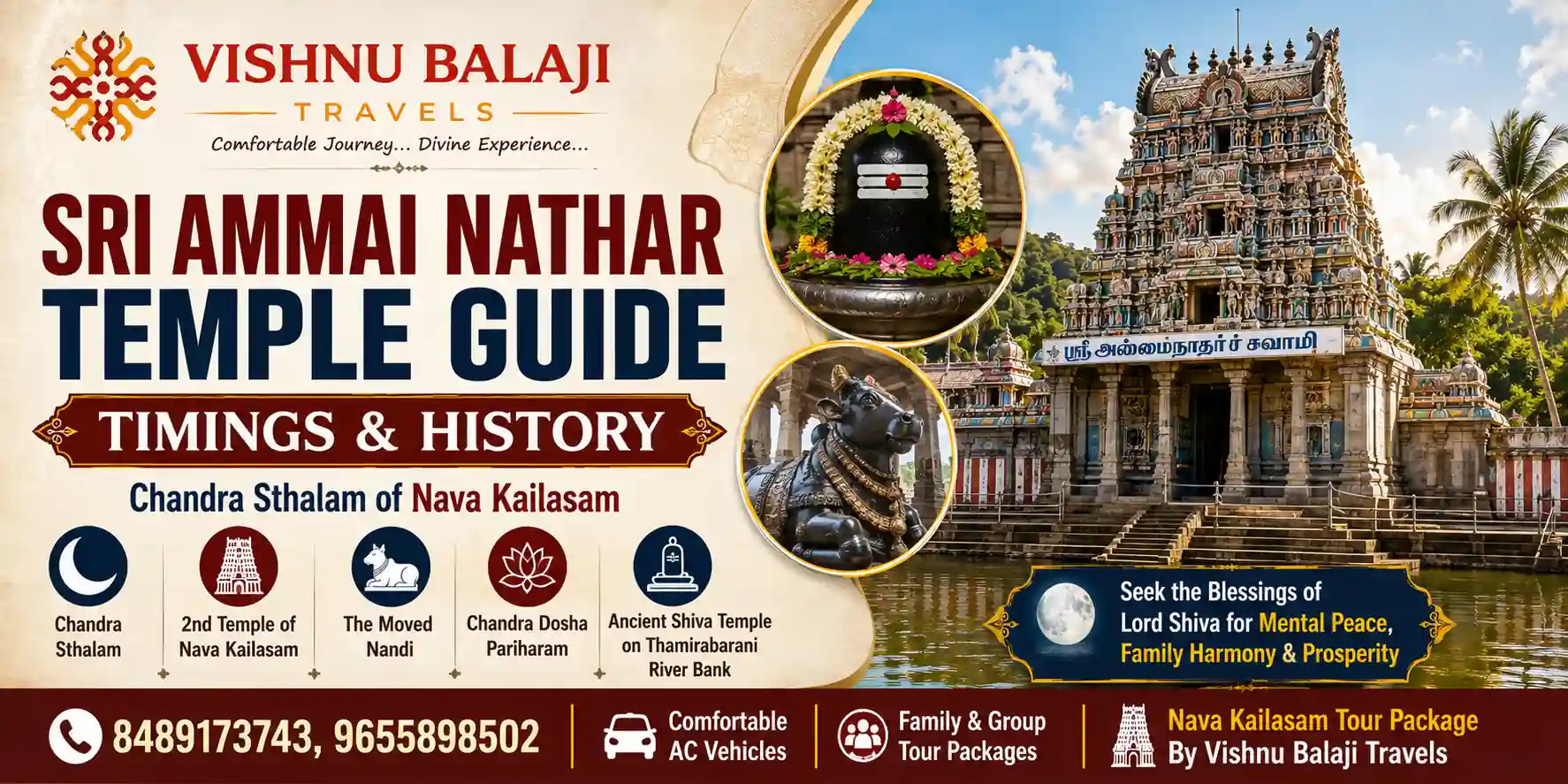
Sri Ammainathar Temple Guide – Timings & History By Vishnu Balaji Travels Located on the sacred banks of the Thamirabarani…

Nava Kailasam Temple Distance from Tirunelveli Planning Nava Kailasam from Tirunelveli is different from visiting a single temple. The nine…
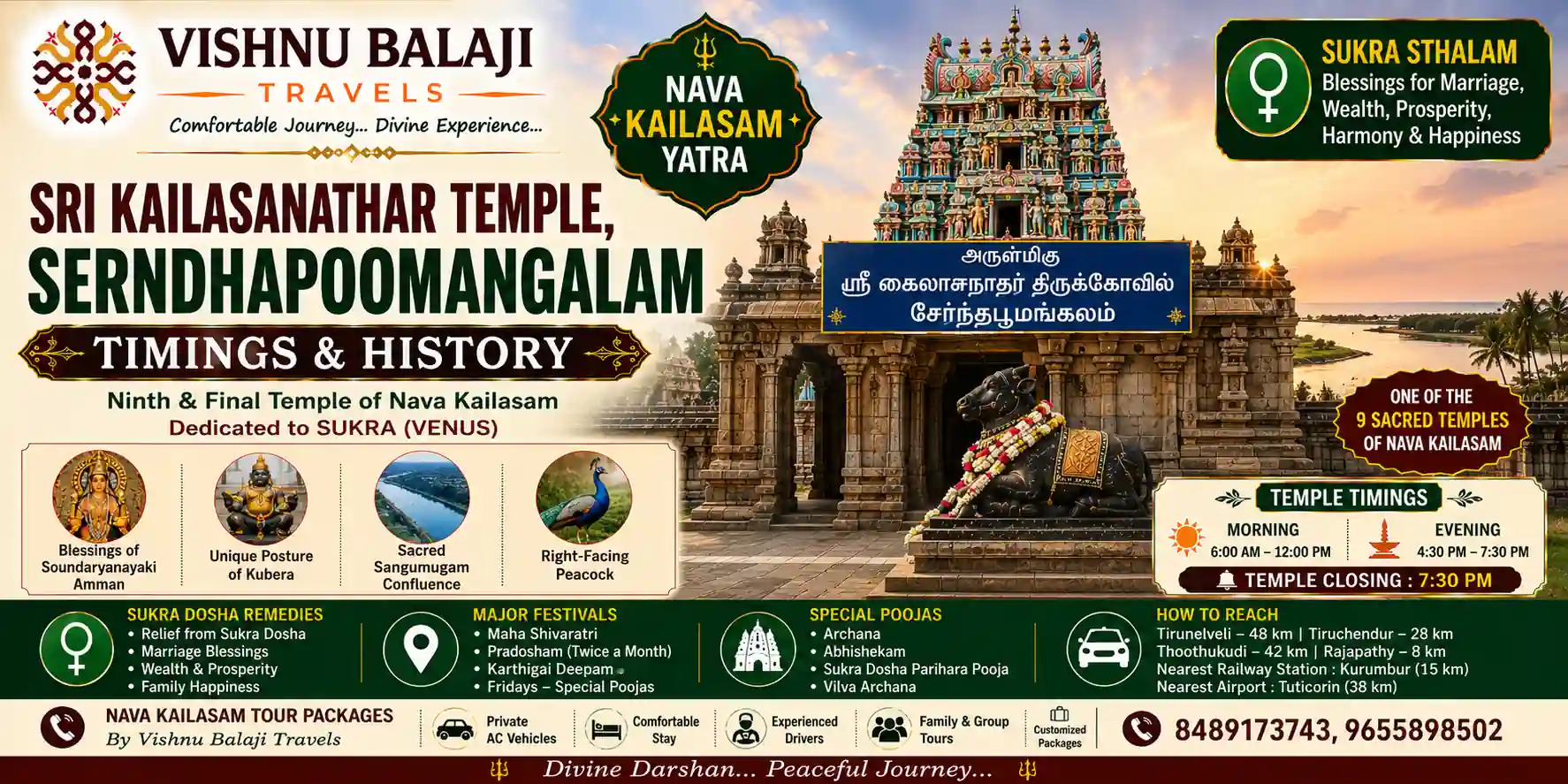
Sri Kailasanathar Temple, Serndhapoomangalam – Timings & History By Vishnu Balaji Travels Sri Kailasanathar Temple, Serndhapoomangalam is the ninth and…

Nava Kailasam Temple Tour FAQs Planning a Nava Kailasam pilgrimage involves more than choosing a travel date. The nine Shiva…
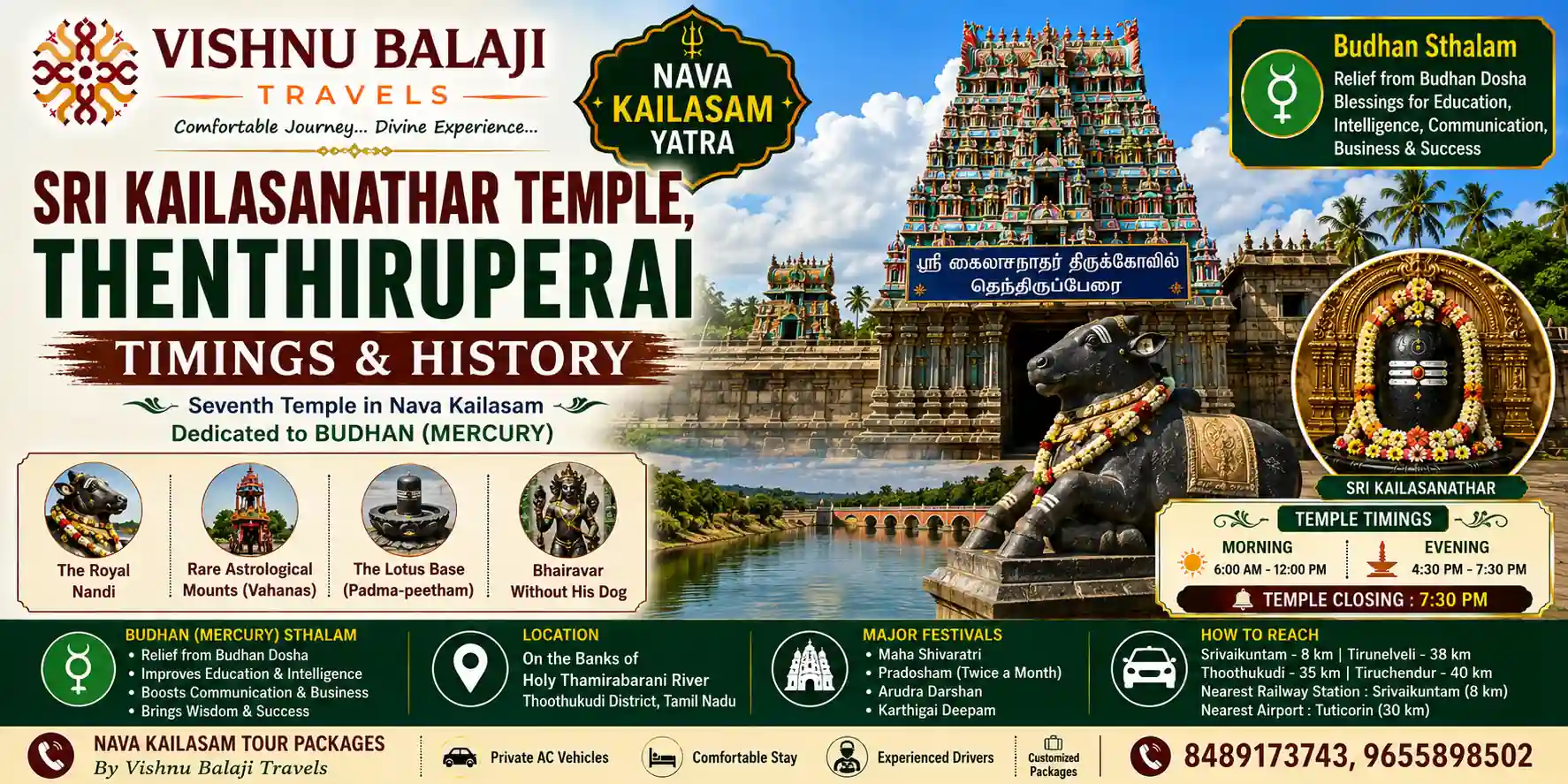
Sri Kailasanathar Temple, Thenthiruperai – Timings & History By Vishnu Balaji Travels Sri Kailasanathar Temple, Thenthiruperai is one of the…

Places to Visit Near Nava Kailasam Temples The Nava Kailasam journey follows the sacred Thamirabarani River through the Tirunelveli and…

Nava Kailasam Shiva Temples – Timings & History By Vishnu Balaji Travels The Nava Kailasam Shiva Temples – Timings &…

Sri Kailasanathar Temple, Srivaikuntam – Timings & History By Vishnu Balaji Travels Located on the sacred banks of the Thamirabarani…