









Sri Abimukeswarar Temple, Tirunelveli – Timings & History
Sri Abimukeswarar Temple, Tirunelveli – Timings & History By Vishnu Balaji Travels Situated in the peaceful village of Kodaganallur, on…




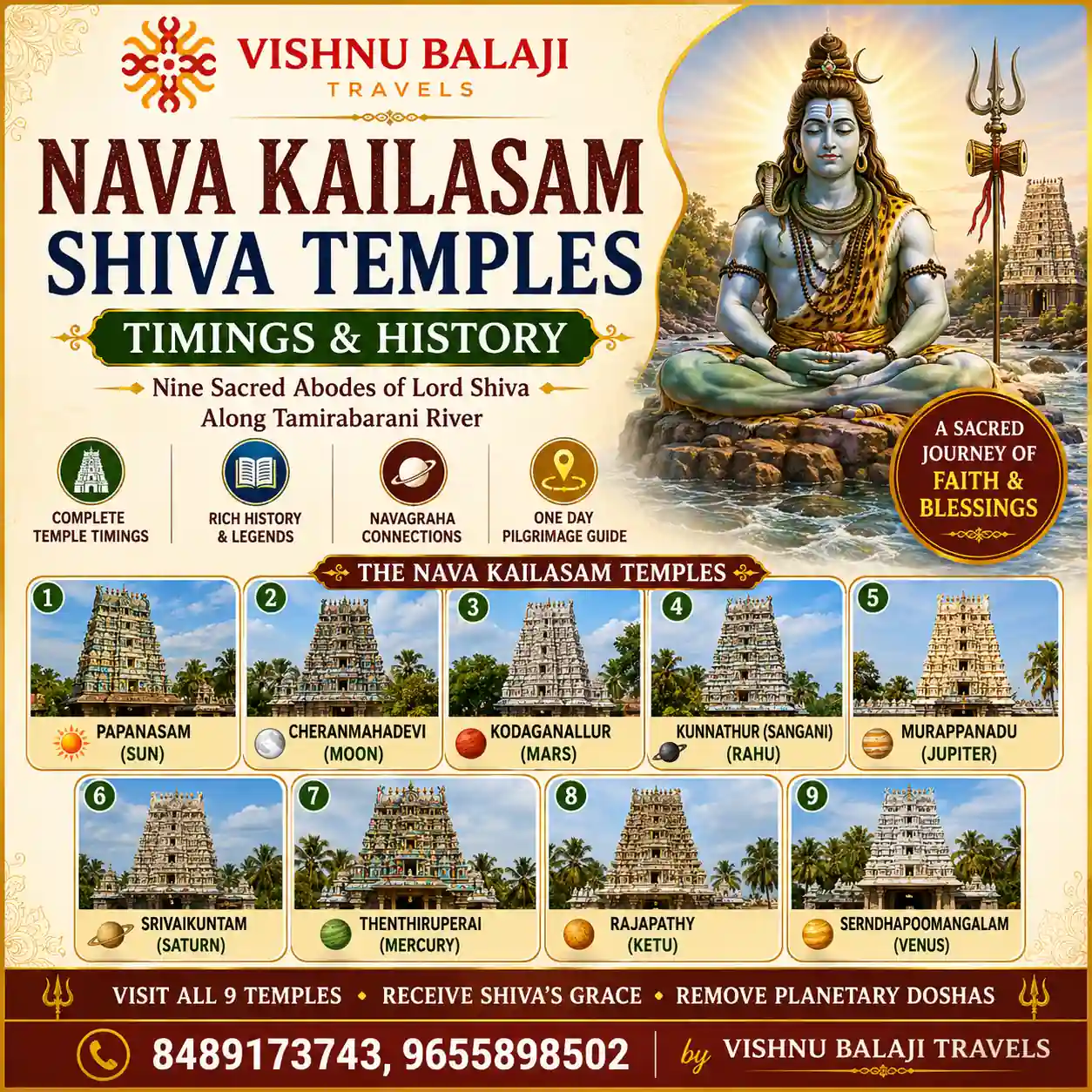
The Nava Kailasam Shiva Temples – Timings & History guide introduces the nine sacred Shiva temples located along the banks of the Tamirabarani River in Tirunelveli and Thoothukudi districts. These ancient temples are closely associated with the Navagrahas and form one of the most important Shiva pilgrimage circuits in South India. Devotees believe that visiting all nine temples brings the blessings of Lord Shiva and helps reduce the effects of planetary doshas.
The Nava Kailasam Shiva Temples are a group of nine ancient Shiva temples established along the Tamirabarani River. According to temple tradition, Uromasa Maharishi, the disciple of Sage Agastya, consecrated these temples after receiving divine guidance from his guru. Today, pilgrims visit all nine temples together as the sacred Nava Kailasam Yatra, seeking spiritual peace and the blessings of Lord Shiva.
The word “Nava” means nine, and “Kailasam” refers to the divine abode of Lord Shiva. These nine temples are collectively known as the Nava Kailasam Shiva Temples because each temple represents one of the Navagrahas. Instead of worshipping the planets directly, devotees worship Lord Shiva in nine different forms, believing His grace helps overcome planetary afflictions and brings peace, health, and prosperity.
| S.No | Temple Name | Main Deity | Associated Planet | Morning Timings | Evening Timings |
|---|---|---|---|---|---|
| 1 | Papanasam – Sri Papanasanathar Temple | Sri Papanasanathar & Ulagammai | ☀️ Sun | 6:00 AM – 12:00 PM | 4:00 PM – 7:00 PM |
| 2 | Cheranmahadevi – Sri Ammainathar Temple | Sri Ammainathar & Avudai Nayaki | 🌙 Moon | 6:00 AM – 12:00 PM | 4:00 PM – 7:00 PM |
| 3 | Kodaganallur – Sri Kailasanathar Temple | Sri Kailasanathar & Sivakami Amman | ♂ Mars | 6:00 AM – 11:30 AM | 4:30 PM – 7:00 PM |
| 4 | Kunnathur (Sangani) – Sri Gotha Parameswarar Temple | Sri Gotha Parameswarar & Sivakami Amman | ☊ Rahu | 6:00 AM – 11:30 AM | 4:30 PM – 7:00 PM |
| 5 | Murappanadu – Sri Kailasanathar Temple | Sri Kailasanathar & Sivakami Amman | ♃ Jupiter | 6:00 AM – 12:00 PM | 4:00 PM – 7:00 PM |
| 6 | Srivaikuntam – Sri Kailasanathar Temple | Sri Kailasanathar & Sivakami Amman | ♄ Saturn | 6:00 AM – 12:00 PM | 4:00 PM – 7:00 PM |
| 7 | Thenthiruperai (Rajapathy Tradition) | Sri Kailasanathar & Soundaryanayaki | ☿ Mercury | 6:00 AM – 11:30 AM | 4:30 PM – 7:00 PM |
| 8 | Rajapathy – Sri Kailasanathar Temple | Sri Kailasanathar & Sivakami Amman | ☋ Ketu | 6:00 AM – 11:30 AM | 4:30 PM – 7:00 PM |
| 9 | Serndhapoomangalam – Sri Kailasanathar Temple | Sri Kailasanathar & Soundaryanayaki | ♀ Venus | 6:00 AM – 12:00 PM | 4:00 PM – 7:00 PM |
Each of the Nava Kailasam Shiva Temples has its own sacred legend and historical importance. Built during different periods of the Pandya kingdom, these temples have been places of Shiva worship for centuries. Their connection with Uromasa Maharishi, Sage Agastya, and the Tamirabarani River makes the Nava Kailasam pilgrimage one of the most revered Shaivite traditions in Tamil Nadu.
Each of the Nava Kailasam Shiva Temples has a unique history and spiritual significance. According to tradition, Uromasa Maharishi, the disciple of Sage Agastya, established these temples along the sacred Tamirabarani River. Every temple is associated with one of the Navagrahas, making the Nava Kailasam Yatra one of the most revered Shiva pilgrimages in Tamil Nadu.
Papanasam is the first and most important temple of the Nava Kailasam Shiva Temples. According to legend, Lord Shiva appeared here to absolve devotees of their sins, giving the temple the name Papanasanathar, meaning “Destroyer of Sins.” The temple is believed to have been consecrated by Uromasa Maharishi and later expanded by the Pandya kings. It is associated with the Sun (Surya) among the Navagrahas.
Darshan: Early morning is the best time for a peaceful darshan.
Sri Ammainathar Temple at Cheranmahadevi is associated with the Moon (Chandra). Temple tradition states that Uromasa Maharishi worshipped Lord Shiva here while performing his sacred pilgrimage. The temple has a long Pandya-era history and is admired for its peaceful surroundings, ancient inscriptions, and beautiful Dravidian architecture.
Darshan: Morning pooja offers a calm and spiritual atmosphere.
Kodaganallur is dedicated to Sri Kailasanathar and represents Mars (Chevvai) in the Nava Kailasam pilgrimage. According to local tradition, sages performed penance here and received the blessings of Lord Shiva. The temple has remained an important Shaivite centre for centuries and is known for its serene riverside location.
Darshan: Visit during the morning hours for a comfortable darshan.
The Kunnathur Temple is dedicated to Sri Gotha Parameswarar and is associated with Rahu. It is believed that Lord Shiva appeared here to bless devotees seeking relief from Rahu dosha. The temple is one of the oldest Shiva shrines in the region and continues to attract pilgrims throughout the year.
Darshan: Rahu Kalam is considered a significant time for worship.
Murappanadu is the Jupiter (Guru) temple among the Nava Kailasam shrines. According to temple history, sages worshipped Lord Shiva here to gain wisdom and spiritual knowledge. The temple is situated on the banks of the Tamirabarani River and is known for its peaceful environment and traditional rituals.
Darshan: Morning poojas are ideal for devotees seeking Guru’s blessings.
Although Srivaikuntam is famous for its Vishnu temple, it also houses the ancient Sri Kailasanathar Temple, representing Saturn (Shani) in the Nava Kailasam circuit. The temple has been an important place of Shiva worship since the Pandya period and is visited by devotees seeking relief from Shani dosha.
Darshan: Saturdays and Pradosham days attract a large number of devotees.
This temple represents Mercury (Budhan) in the Nava Kailasam pilgrimage. According to tradition, the original Rajapathy temple was affected by floods, and devotees now worship Lord Shiva through the temple associated with the Rajapathy tradition. It remains an important stop during the Nava Kailasam Yatra.
Darshan: Weekday mornings are usually peaceful for darshan.
Rajapathy is associated with Ketu and has a long-standing place in the history of the Nava Kailasam pilgrimage. Although the original temple suffered damage over time, its spiritual significance continues through local worship traditions. Devotees visit this sacred site to seek Lord Shiva’s blessings for spiritual growth and relief from Ketu dosha.
Darshan: Devotees often visit this shrine along with the nearby Nava Kailasam temples.
Serndhapoomangalam is the final temple of the Nava Kailasam Shiva Temples and represents Venus (Sukra). According to temple tradition, Lord Shiva blessed Uromasa Maharishi here upon the successful completion of his pilgrimage. The temple is known for its peaceful surroundings and marks the spiritual completion of the Nava Kailasam Yatra.
Darshan: Evening poojas provide a serene conclusion to the pilgrimage.
The Nava Kailasam Shiva Temples are especially crowded during Pradosham and Maha Shivaratri, when thousands of devotees visit to perform special prayers and seek Lord Shiva’s blessings. Abhishekam, Rudrabhishekam, Deeparadhana, and special alankarams are conducted throughout the day. Many devotees also undertake the complete Nava Kailasam Yatra on these auspicious occasions.
The temples can be visited throughout the year, but the cooler months are ideal for completing the pilgrimage comfortably. Devotees seeking special spiritual benefits often plan their visit during important Shiva festivals.
| Season | Why Visit |
|---|---|
| October – March | Pleasant weather for temple pilgrimage |
| Maha Shivaratri | Grand celebrations and night-long worship |
| Every Pradosham | Special Shiva poojas and Abhishekams |
| Karthigai Month | Sacred month dedicated to Lord Shiva |
| Tamil New Year & Chithirai | Special temple rituals and festivals |
Most pilgrims can complete the Nava Kailasam Shiva Temples pilgrimage in a single day with an early start and proper planning.
| Time | Temple |
|---|---|
| 6:00 AM | Papanasam – Sri Papanasanathar Temple |
| 7:00 AM | Cheranmahadevi – Sri Ammainathar Temple |
| 8:00 AM | Kodaganallur – Sri Kailasanathar Temple |
| 9:00 AM | Kunnathur (Sangani) – Sri Gotha Parameswarar Temple |
| 10:00 AM | Murappanadu – Sri Kailasanathar Temple |
| 11:00 AM | Srivaikuntam – Sri Kailasanathar Temple |
| 12:30 PM | Lunch Break |
| 2:00 PM | Thenthiruperai (Rajapathy Tradition) |
| 3:00 PM | Rajapathy – Sri Kailasanathar Temple |
| 4:00 PM | Serndhapoomangalam – Sri Kailasanathar Temple |
| 5:00 PM | Complete the Nava Kailasam Yatra |
Vishnu Balaji Travels offers comfortable and well-planned Nava Kailasam Shiva Temple Tour Packages for families, senior citizens, and pilgrim groups. Our customized itineraries ensure that devotees can complete the sacred pilgrimage conveniently while enjoying a hassle-free travel experience.
The Nava Kailasam Shiva Temples – Timings & History represent one of the most sacred Shaivite pilgrimage circuits in Tamil Nadu. Established according to the tradition of Uromasa Maharishi and connected to the holy Tamirabarani River, each temple has its own history, presiding deity, and Navagraha association. Completing the Nava Kailasam Yatra is believed to bring spiritual fulfillment, inner peace, and the blessings of Lord Shiva.
Whether you are visiting to perform special prayers, seek relief from planetary doshas, or explore the rich heritage of these ancient temples, the Nava Kailasam Shiva Temples offer a memorable spiritual journey. With proper planning and a well-organized itinerary, pilgrims can comfortably complete all nine temples in a single day and experience one of South India’s most revered Shiva pilgrimages.
Explore Popular Blog Posts Across Categories
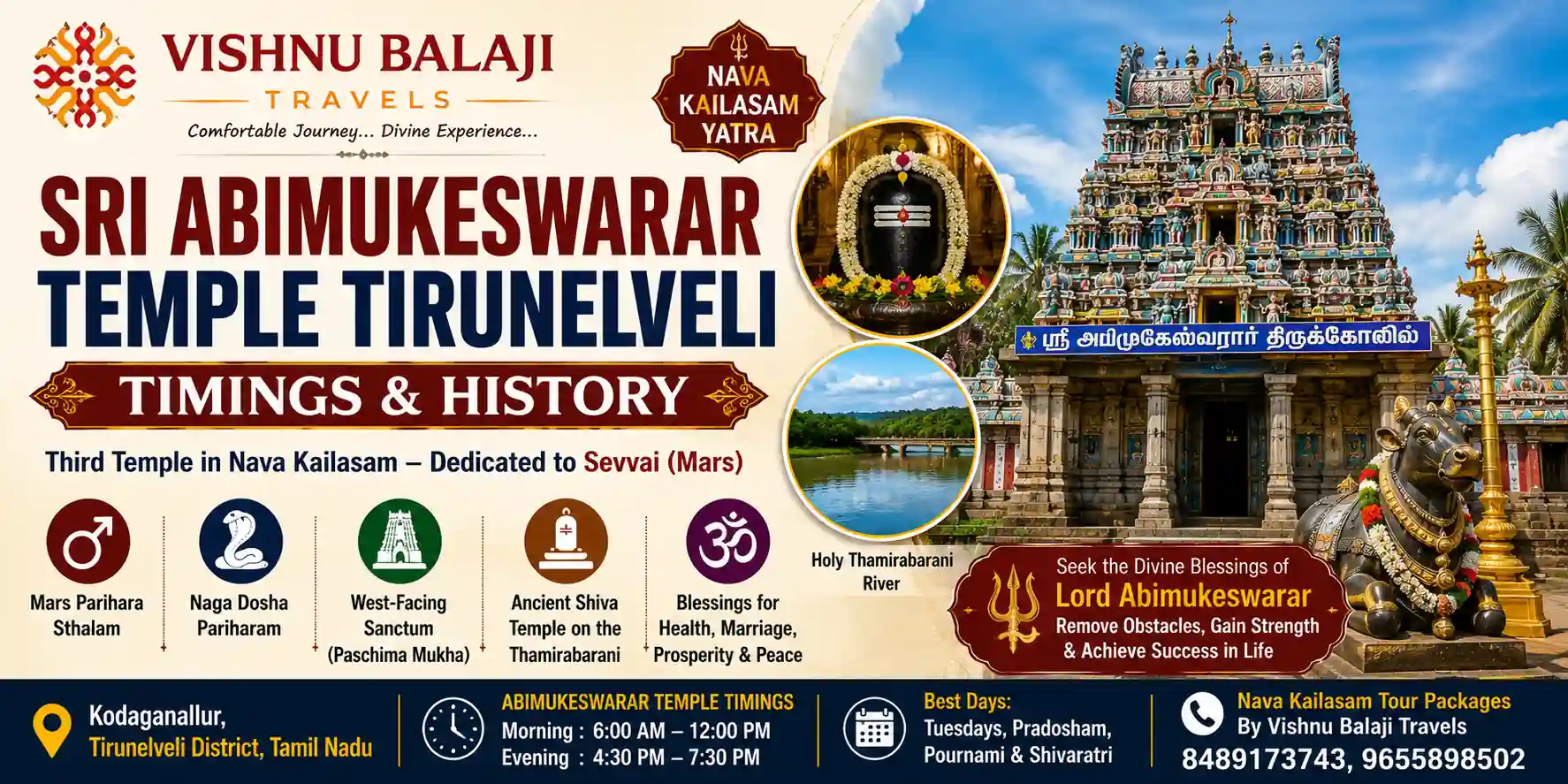
Sri Abimukeswarar Temple, Tirunelveli – Timings & History By Vishnu Balaji Travels Situated in the peaceful village of Kodaganallur, on…

The nine Nava Kailasam temples are spread across the Tirunelveli–Thoothukudi region, mainly along the Thamirabarani River. Because they are located…

Nava Kailasam Temple Distance from Tirunelveli Planning Nava Kailasam from Tirunelveli is different from visiting a single temple. The nine…
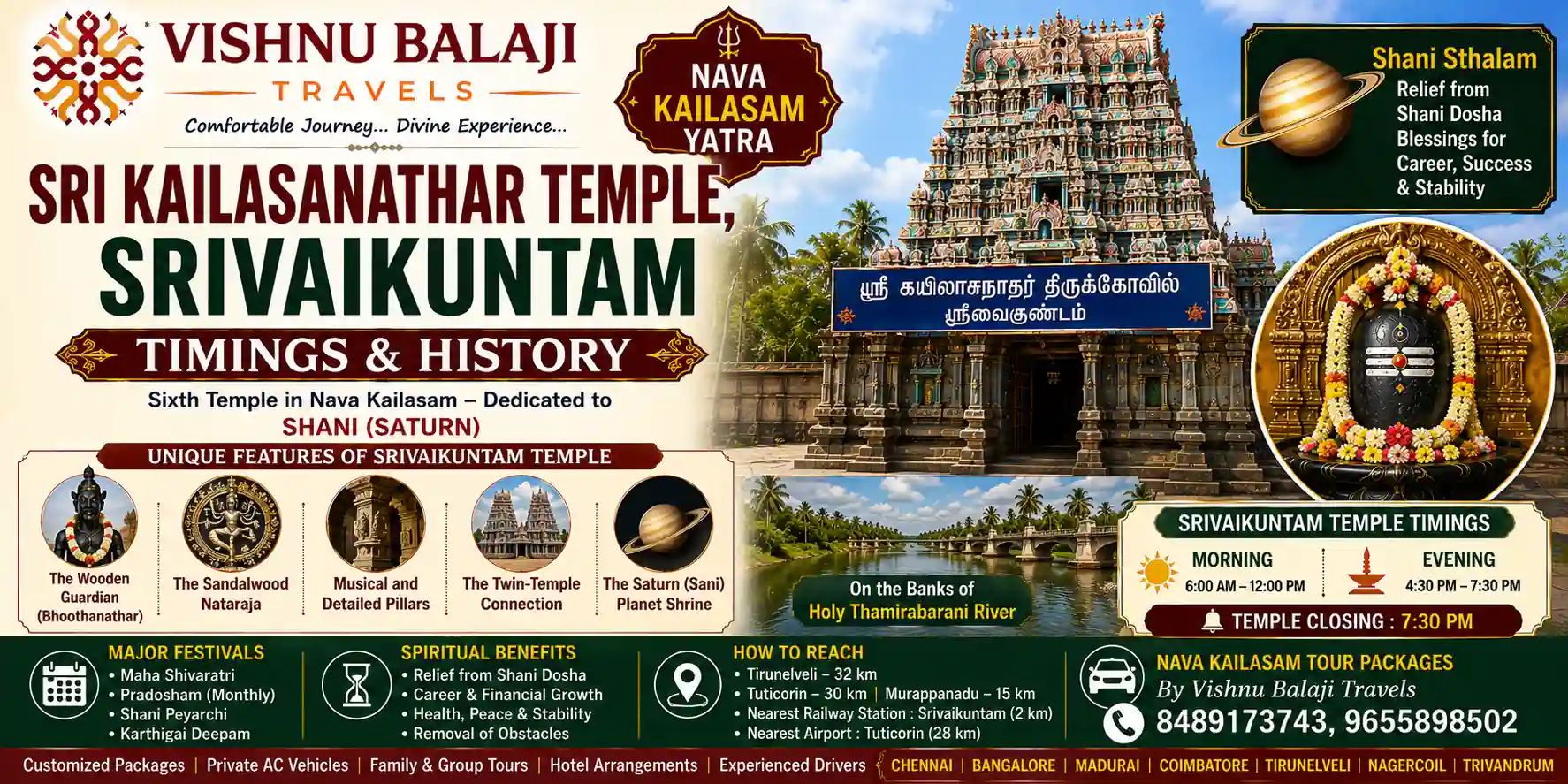
Sri Kailasanathar Temple, Srivaikuntam – Timings & History By Vishnu Balaji Travels Located on the sacred banks of the Thamirabarani…
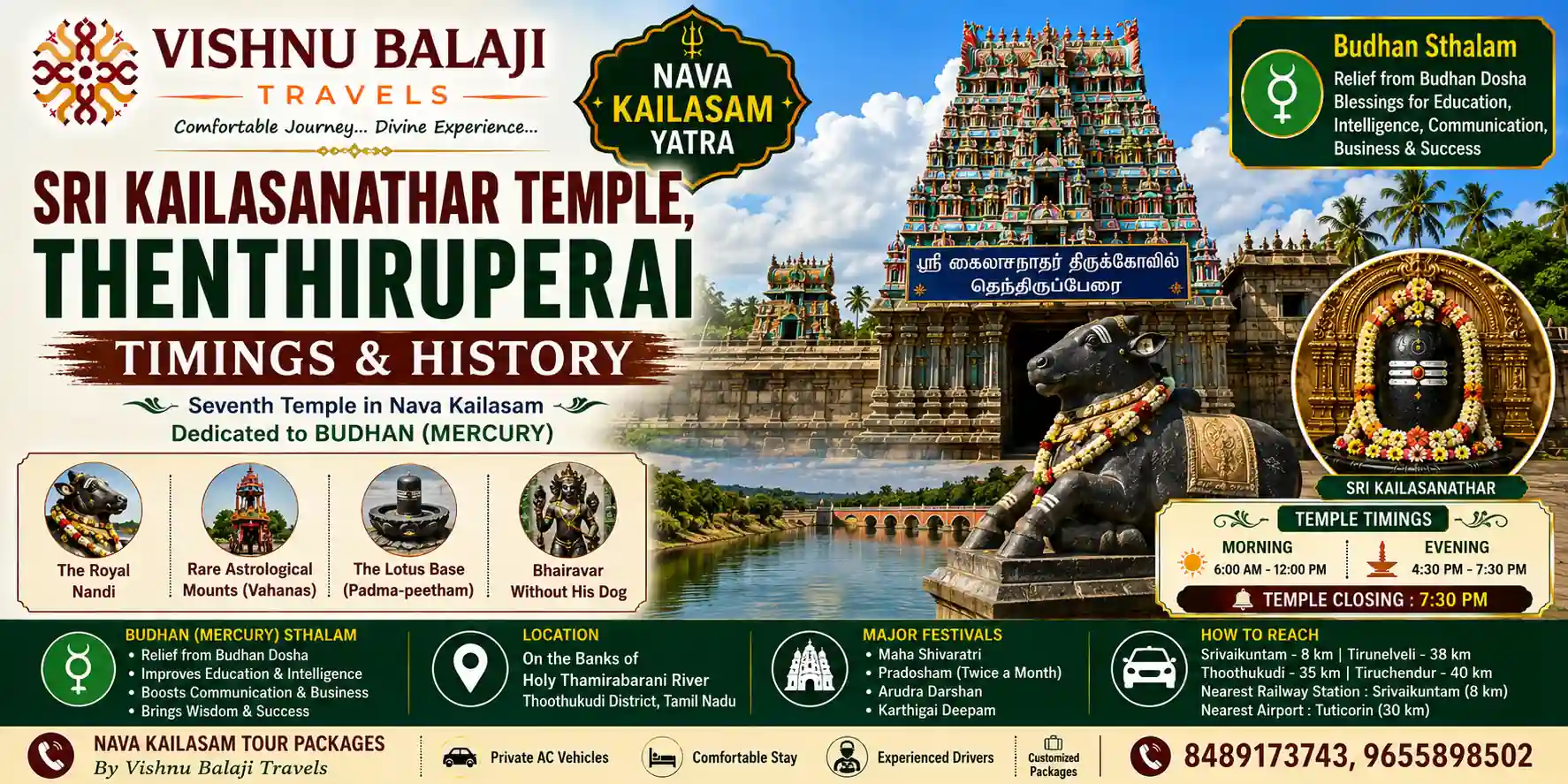
Sri Kailasanathar Temple, Thenthiruperai – Timings & History By Vishnu Balaji Travels Sri Kailasanathar Temple, Thenthiruperai is one of the…
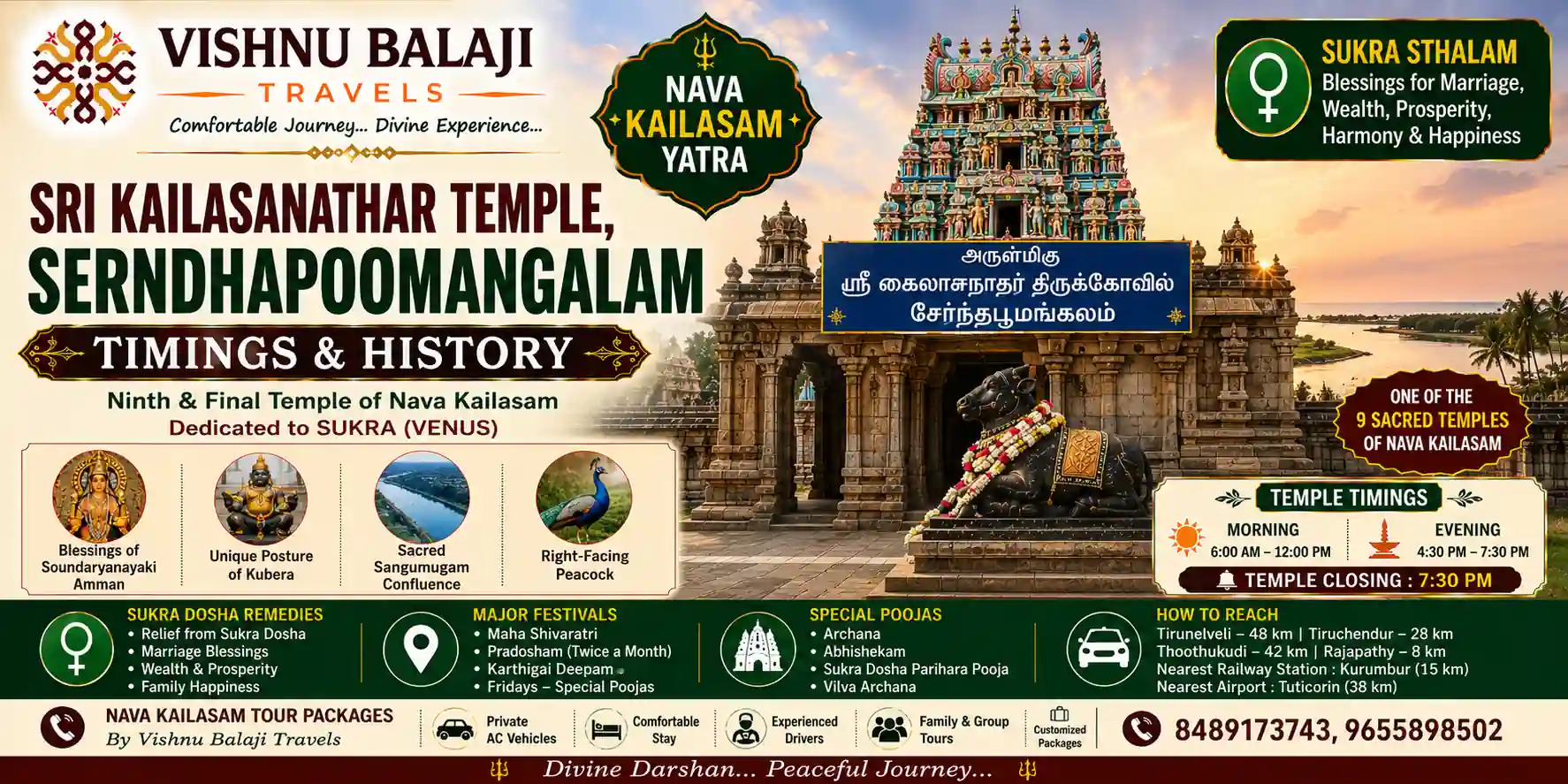
Sri Kailasanathar Temple, Serndhapoomangalam – Timings & History By Vishnu Balaji Travels Sri Kailasanathar Temple, Serndhapoomangalam is the ninth and…

Nava Kailasam Temple Dress Code and Visitor Guide The Nava Kailasam Temple Dress Code and Visitor Guide helps devotees prepare…
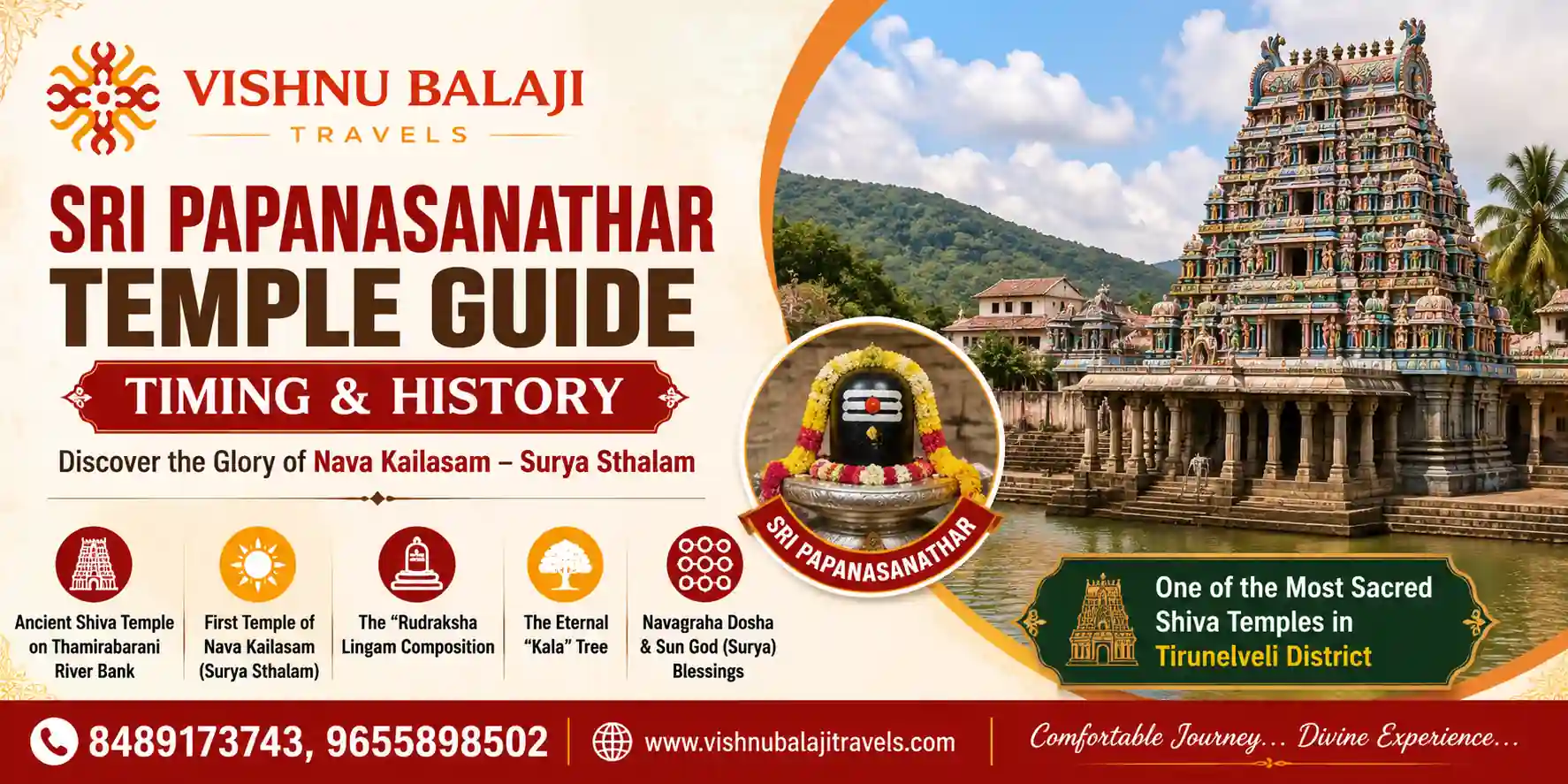
Sri Papanasanathar Temple Guide – Timings & History By Vishnu Balaji Travels Nestled at the foothills of the majestic Western…