









Lepakshi Tour Itinerary from Hyderabad – 1 Night 2 Days
Lepakshi Tour Itinerary from Hyderabad – 1 Night 2 Days Experience History, Heritage & Spirituality with Vishnu Balaji Travels Looking…





Lepakshi Temple is one of South India’s most photogenic heritage destinations. Famous for its magnificent Vijayanagara architecture, intricate stone carvings, giant monolithic sculptures, and mysterious Hanging Pillar, the temple attracts photographers, travel bloggers, history enthusiasts, and architecture lovers from across the country.
If you’re looking for a complete Lepakshi Temple Photography Guide: Best Spots & Camera Tips, this guide by Vishnu Balaji Travels will help you discover the best photography locations, ideal lighting conditions, camera settings, and travel tips to capture unforgettable images.
Built during the 16th century under the Vijayanagara Empire, Lepakshi Temple is one of Andhra Pradesh’s finest heritage monuments. The combination of ancient architecture, natural granite landscapes, mythological sculptures, and artistic frescoes makes it a perfect destination for:
Whether you’re an amateur using a smartphone or a professional carrying a DSLR, Lepakshi has countless picture-perfect locations.
Lighting plays an important role in photography.
Ideal for:
Perfect for:
During midday, harsh sunlight creates strong shadows and overexposed images.
One of India’s largest single-stone Nandi statues.
Best Angle:
Capture the Nandi from a low angle with blue skies behind it.
Photography Style:
The massive gateway and stone pillars create a dramatic welcome shot.
Best Time:
Morning sunlight.
Perhaps the most photographed attraction inside the temple.
Capture:
Flash photography should be avoided inside the temple.
One of Lepakshi’s most iconic monuments.
Try:
The colourful Vijayanagara frescoes are among the temple’s greatest treasures.
Use:
Avoid flash to help preserve the artwork.
The long rows of carved stone pillars create beautiful leading lines.
Excellent for:
Every pillar tells a story.
Capture:
Outside the temple, giant granite formations provide excellent natural compositions.
Perfect for:
The open courtyard combines architecture, sculptures, and natural light.
Ideal for:
The surrounding rocky terrain becomes golden during sunset.
Excellent for:
| Photography Type | Suggested Settings |
|---|---|
| Architecture | f/8–f/11, ISO 100, Wide Angle |
| Portrait | f/2.8–f/4 |
| Landscape | f/8–f/11 |
| Sculpture Close-up | f/5.6 |
| Indoor Temple | ISO 400–800, No Flash |
| Smartphone | HDR Mode, Grid Lines On |
Modern smartphones can capture stunning images.
Please respect the temple and other visitors.
Bring:
The best months are:
The pleasant weather and clear skies provide ideal lighting throughout the day.
Whether you’re a beginner or a professional, this Lepakshi Temple Photography Guide: Best Spots & Camera Tips covers everything you need. Vishnu Balaji Travels offers customized photography and heritage tours to Lepakshi Temple with:
Whether you’re a beginner or a professional photographer, we help you experience Lepakshi at the best time for unforgettable photographs.
This Lepakshi Temple Photography Guide: Best Spots & Camera Tips is designed to help you capture the beauty of one of Andhra Pradesh’s finest heritage temples. From the mysterious Hanging Pillar and majestic Monolithic Nandi to ancient frescoes and intricate stone carvings, every corner of Lepakshi offers a unique photographic opportunity. Plan your visit during the golden hours and travel comfortably with Vishnu Balaji Travels for a memorable photography experience.
Photography is generally allowed in the temple premises. However, visitors should follow the temple authorities’ guidelines and avoid using flash near ancient paintings and sculptures.
The best time is early morning (6:30 AM–9:00 AM) or during the evening golden hour (4:00 PM–sunset) for soft natural lighting and fewer crowds.
The top photography spots include the Hanging Pillar, Monolithic Nandi, Nagalinga Sculpture, temple corridors, ancient ceiling paintings, granite rock formations, and the Veerabhadra Swamy Temple entrance.
Yes, DSLR and mirrorless cameras are generally permitted. However, commercial photography or videography may require prior permission from the authorities.
Drone photography is generally restricted around heritage monuments unless special permission is obtained from the concerned authorities.
A wide-angle lens (16–35 mm) is ideal for architecture, while a standard zoom lens (24–70 mm) works well for sculptures and portraits.
Yes. Modern smartphones with HDR mode and good lighting can capture excellent photos of the temple’s architecture and sculptures.
October to February offers pleasant weather, clear skies, and comfortable conditions for outdoor photography.
Photography enthusiasts should plan at least 2–3 hours to explore the temple, capture the monuments, and visit the nearby Monolithic Nandi.
Yes. Vishnu Balaji Travels offers private AC cab tours with flexible schedules, allowing visitors to spend more time at the best photography locations
Explore Popular Blog Posts Across Categories

Lepakshi Tour Itinerary from Hyderabad – 1 Night 2 Days Experience History, Heritage & Spirituality with Vishnu Balaji Travels Looking…
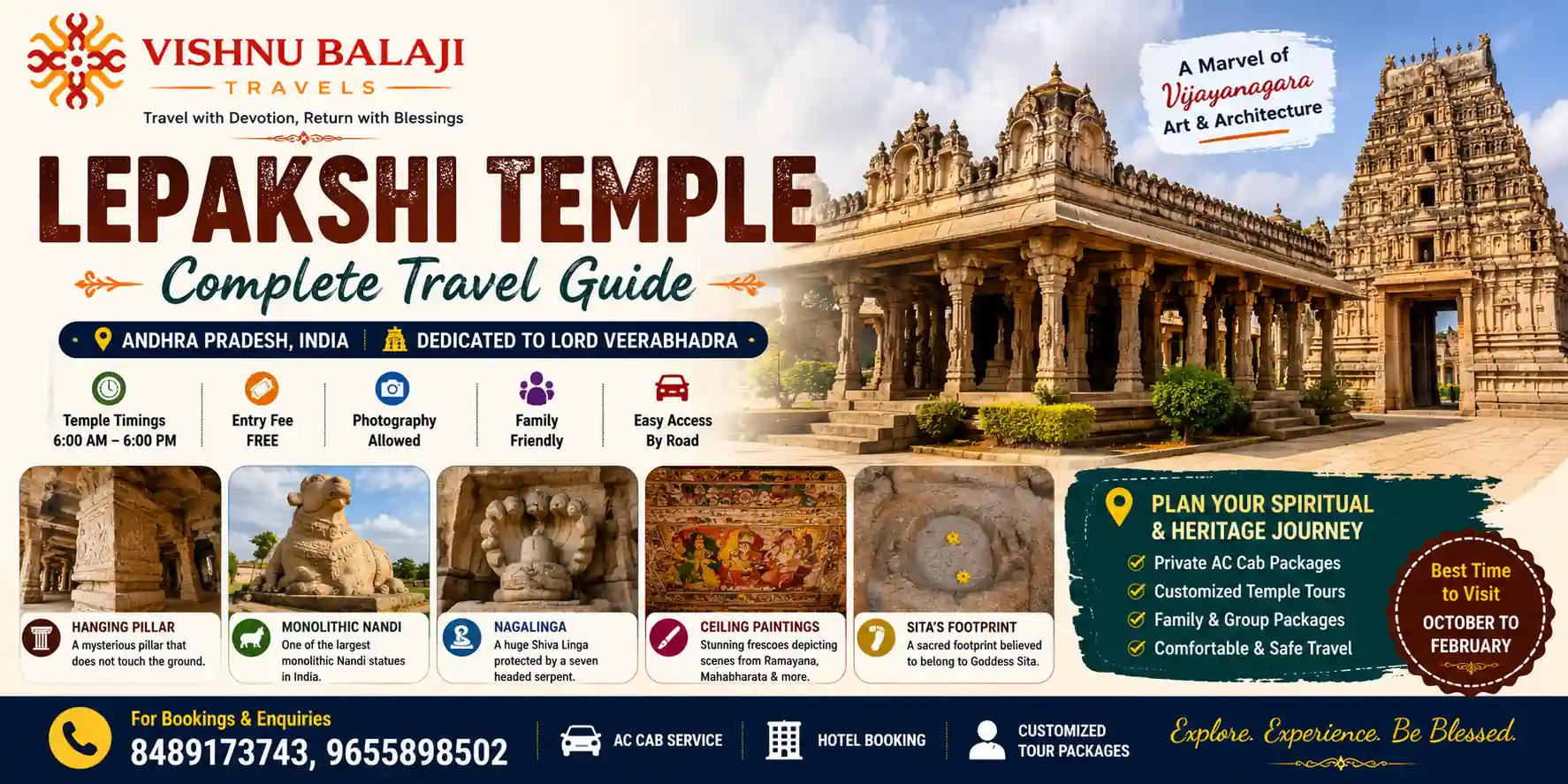
Lepakshi Temple – Complete Travel Guide by Vishnu Balaji Travels Lepakshi Temple is one of Andhra Pradesh’s most remarkable heritage…

How to Reach Lepakshi Temple from Hyderabad – by Vishnu Balaji Travels Planning a heritage and spiritual getaway from Hyderabad?…
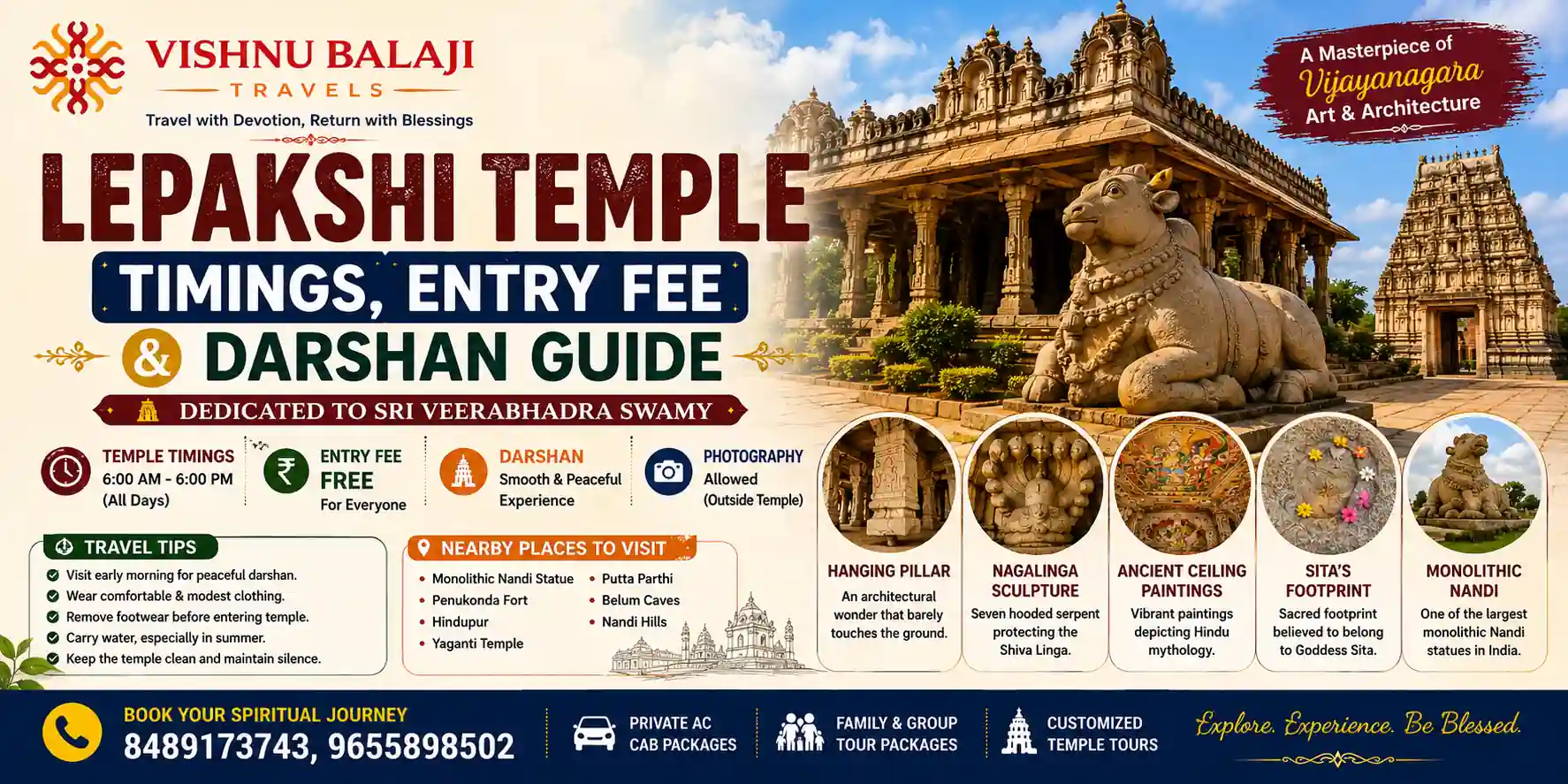
Lepakshi Temple Timings, Entry Fee & Darshan Guide Planning a visit to the famous Veerabhadra Temple? This Lepakshi Temple Timings,…
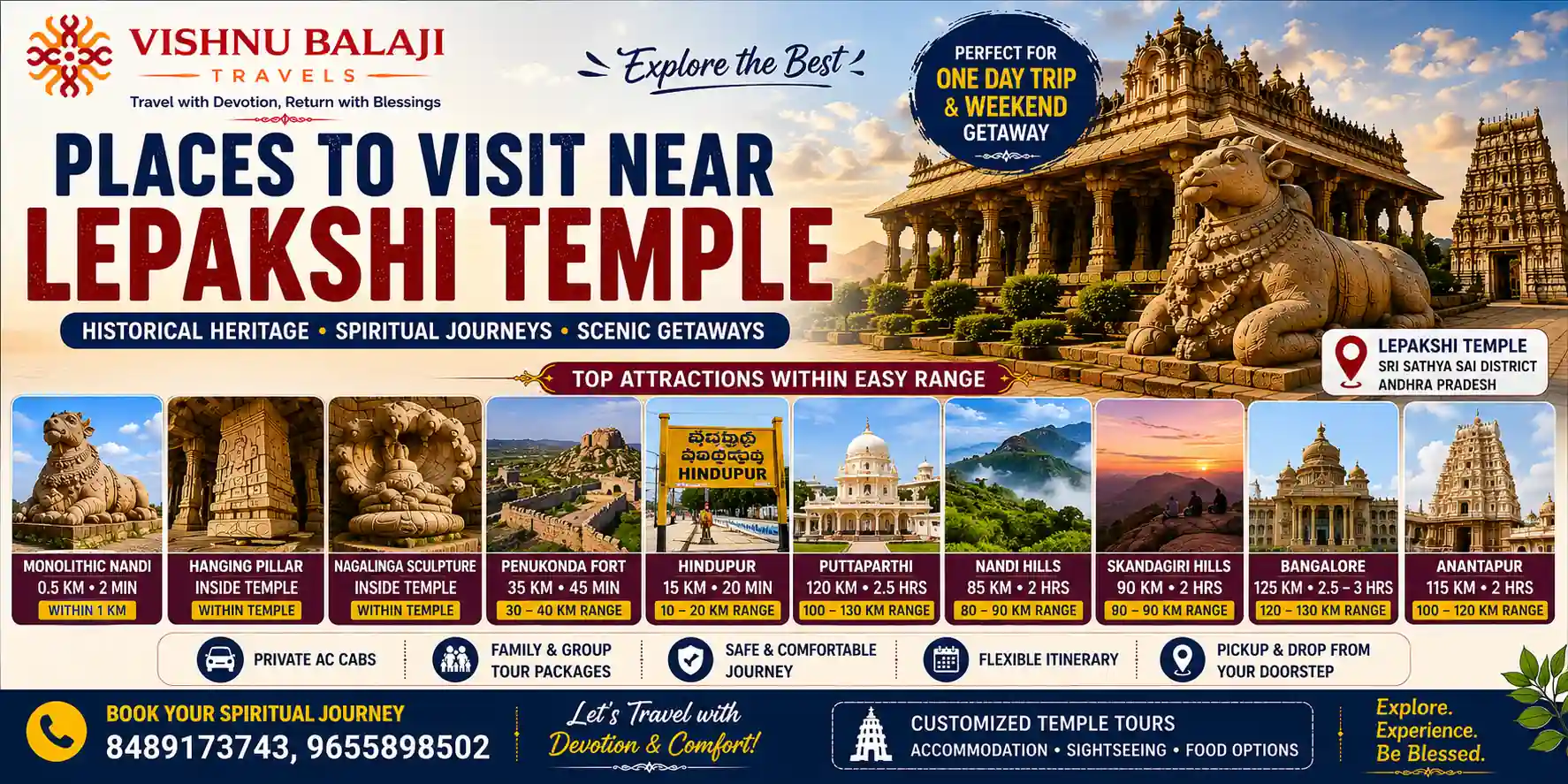
Places to Visit Near Lepakshi Temple – by Vishnu Balaji Travels Lepakshi Temple is one of Andhra Pradesh’s most famous…

How to Reach Lepakshi Temple from Bangalore – by Vishnu Balaji Travels Planning a spiritual and heritage trip from Bengaluru?…

One-Day Lepakshi Tour Itinerary from Bangalore – by Vishnu Balaji Travels Looking for a perfect weekend getaway from Bangalore? A…